Osiris and Isis - Love Never Dies
Osiris and Isis were the golden couple, the top of the top, the perfect couple. Let’s completely ignore their mythological origin of being siblings; all gods do the incest thing. The important point is that they were happy together until Osiris died and was confined in the underworld for the rest of eternity, seemingly separated from the living world and his love. However, in tomb art, they rarely appear separated for long, as both Isis and their sister Nepthys are depicted standing behind the lord of the underworld. In this case, these gods are fortunate: they can see one another, even if they cannot have more children. The most heartbreaking moment I felt for a Goa’uld was when Osiris was revealed to have lost Isis’s decades jar to breakage centuries ago, meaning Osiris would have to face the rest of time alone.
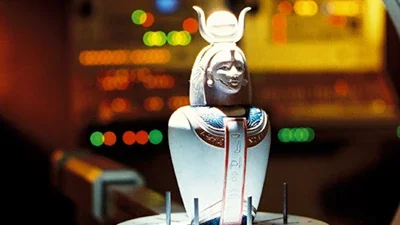
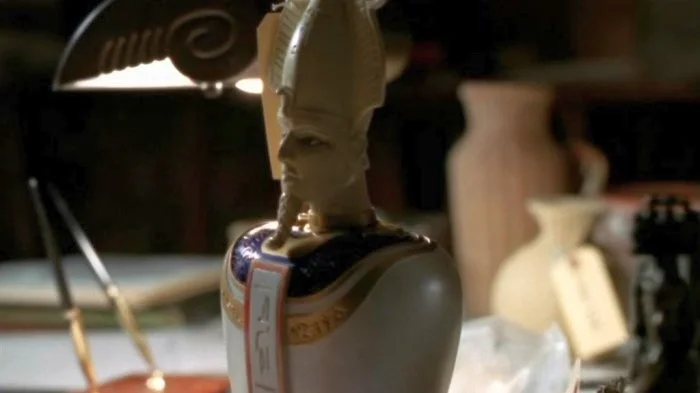
For the Lord of the Underworld, obviously, love doesn’t actually die. Even if it did, the paintings and texts depict an afterlife in which anything desired is available, so it could literally be anything the ancient Egyptians wanted. So why would they separate their best ship? However, Stargate did; before examining the revised versions, let’s discuss the original stories.
We’ve gone over multiple stories in which Osiris takes part, especially the origin of his “rebirth” and the invention of the process of mummification. However, to discuss the myths of one, one needs to connect the two characters.
Background
What’s in a Name
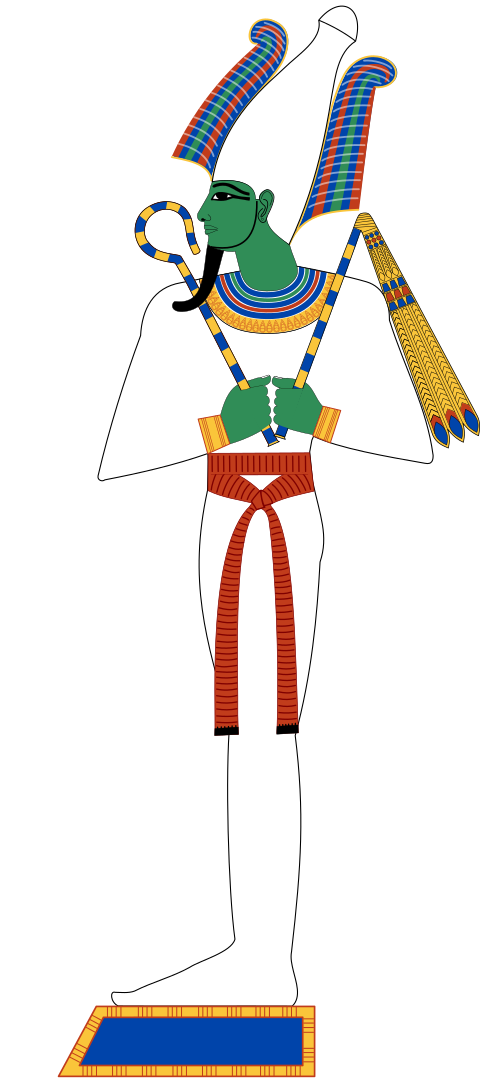
Figure 3. Standing Osiris
Osiris
Osiris is the Greek-Latinised form of the ancient Egyptian name Usir, Wsjr, Wesir, or Asar (also spelt Ausar) (KAI 31, 47 (Cippi of Melqart), 48 (Banobal stele), 91; RÉS 367, 504). However, the closest approximation of Osiris’s name in Ancient Egyptian is the unpronounceable form jsjrt (ꜣsjr or jsjrj) (Meehan 2022). It is commonly interpreted as the epithet "mighty one," although its actual meaning is uncertain. According to Geraldine Pinch, an Egyptologist at the Oriental Institute of Oxford University, it is often attributed to him and may allude to his role as Death personified (Pinch 2004: 178). The name has also been said to mean ‘powerful,’ ‘the seat of the eye,’ or ‘Product of the Eye,' derived from st-jrt, linking to myths about the eye of Horus (Meehan 2022). As well as being reconstructed from hieroglyphs to have been pronounced Us-iri (oos-ee-ree), meaning 'Throne of the Eye' and survives into the Coptic language as Ousire. As the Egyptian god of the afterlife, death, resurrection, and agriculture, the name signifies the ‘Judge of the Dead’ and represents eternal life and fertility.
As we can already see, the meaning of the name is inseparable from Osiris's role as the Egyptian god of the afterlife, and the ideas of what his name was became the linguistic and symbolic map of his divine functions. However, this may be a consequence of Egyptologists' knowledge of Osiris’s role and epithets, and of working backwards to construct a realistic explanation. Based on his most important myth, resurrection embodies a deity who was slain and subsequently revived, making his name a powerful symbol of rebirth and renewal. He was also believed to govern the flooding of the Nile, effectively linking his name to agriculture and the cycles of growth. Furthermore, he bears the titles of the “Inert One”, “Lord of Silence”, and “Merciful Judge”, which represent the just and peaceful transition of souls into the underworld and reflect his roles in both judgment and mercy.
1. Linguistic Connection: "The Mighty One"
The most common translation of wsjr is "The Powerful" or "The Mighty One," stemming from the root wsr. This title highlights his supreme authority over death, signifying his role as the "Mighty One" who has the power to grant eternal life to the deceased. His influence extends beyond the physical world to moral authority: he is called the "Lord of Power" because he renders the final judgment in the Hall of Truth, where he determines each soul's fate.

Figure 4. Osiris Name
2. Hieroglyphic Connection: "Throne" and "Eye”:
This interpretation is based on the two primary hieroglyphs used to write his name: a throne (st) and an eye (jr), which can be translated as "He Who Sees the Throne" or "He Who Takes His Seat." The throne represents his authority as Egypt's first king and his continuous reign in the Underworld, symbolising the stability (Djed) he provides to the cosmos. The eye signifies his omniscience and healing abilities, illustrating his capacity to perceive the truth during judgment. In myth, the Eye of Horus was used to revive Osiris, making the eye a lasting symbol of his resurrection and healing.
3. Connection to Fertility: "The Great Green"
Beyond his formal name, Osiris was known by epithets that linked him to the land’s physical health. Wennefer, translating to "The Beautiful" or "Eternally Good One," reflects his role in the Nile's annual flood, which brought "beauty" (life) back to the parched earth. Kmj Wer and Wadj Wer mean "The Great Black" (the fertile silt of the Nile) and "The Great Green" (new plant growth), respectively, and directly associate him with the agricultural cycle of death in winter and rebirth in spring. These titles also connect to his iconography, as he is most often depicted with green skin.
4. Ritual Connection: "Becoming an Osiris"
The connection between the name and the role was so profound that every deceased Egyptian had "Osiris" added to their name, such as "The Osiris Ani." This ritual was thought to connect the individual with divine power, allowing him to participate in the divine resurrection and to aid his transition to the afterlife. Concerning the Mummification Product, some scholars regard it as a "product" or "something made," specifically referring to Osiris as the first being successfully mummified, often depicted as a generally mummified figure. In addition, one of Osiris’s epithets, “Foremost of the Westerners,” originated with Khentamentiu of Abydos, a funerary deity whom Osiris ultimately replaced — but more on that later (Pinch 2004:178).

Figure 5. Scenes from the north wall of the burial chamber of Tutankhamun. On the left side, Tutankhamun, followed by his ka (an aspect of his soul), embraces Osiris. (Photo from Diego Delso, Tomb of Tutankhamun, Valley of the Kings, Luxor, Egypt)
The story of Osiris is unique among Egyptian gods because, unlike many deities who were considered fully formed from the start, Osiris gradually developed from a mysterious local figure into one of the most important religious figures in the Nile Valley.
The origins of this can be traced back to the Pyramid Texts from the 5th Dynasty in the Old Kingdom, c. 2494–2345 BCE. These are the earliest known religious writings in which Osiris is first portrayed as a deceased king who has been revived. Initially, he was not universally worshipped as a god but was primarily regarded as a divine figure associated with the Pharaoh. During this period, two rival religious concepts existed: the Solar Cult, focused on Re (the sun god), and the Osirian Cult. Re symbolised the living king, while Osiris represented the deceased ruler. Over time, these beliefs combined, leading to the view of the Pharaoh as Re in the sky during the day and Osiris in the underworld at night.
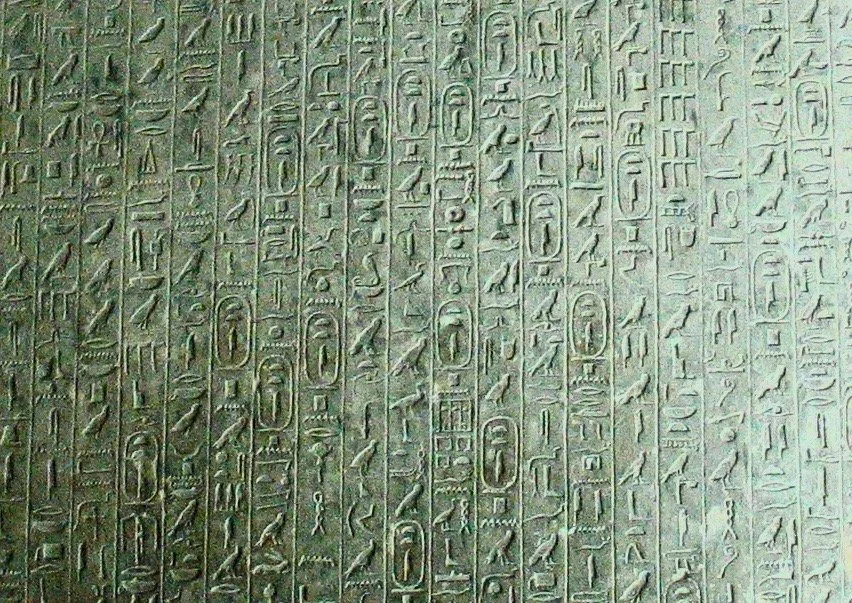
Figure 6. Pyramid text in Teti pyramid in Saqqara, Egypt
The next major change occurred during the Middle Kingdom, c. 2055–1650 BCE, a period marked by political chaos and unrest. This era was crucial to establishing Osiris as a god for everyone, not just kings. The monopoly over the afterlife was broken, and ordinary people believed they too could become an Osiris after death. The city of Abydos became the central pilgrimage site for followers of Osiris. Egyptians travelled there to participate in mysterious rituals known as "Mystery Plays," which reenacted Osiris’s death and rebirth. During this period, the concept of postmortem moral judgment also became central. To enter Osiris's kingdom, a person no longer needed only a grand tomb; they had to have a pure heart, symbolising their moral integrity.
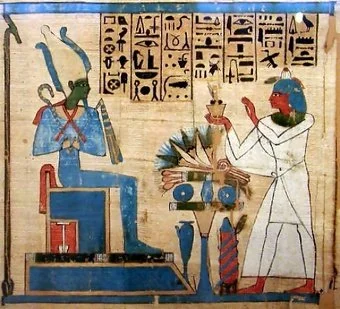
Figure 7. Osiris in the Book of the Dead
As Egypt grew into a powerful empire during the New Kingdom, from around 1550 to 1070 BCE, the stories about Osiris became more detailed and standardised. The myth of the Osirian Triad—Osiris, his wife Isis, and their son Horus—became more fully developed. The story where Set murders Osiris, Isis gathers his broken body parts, and Horus seeks revenge became a key national myth. This period also saw the creation of the famous "Book of the Dead," a collection of spells and guides inscribed on papyrus scrolls. These texts helped the deceased navigate the dangerous underworld and achieve a peaceful afterlife with Osiris.
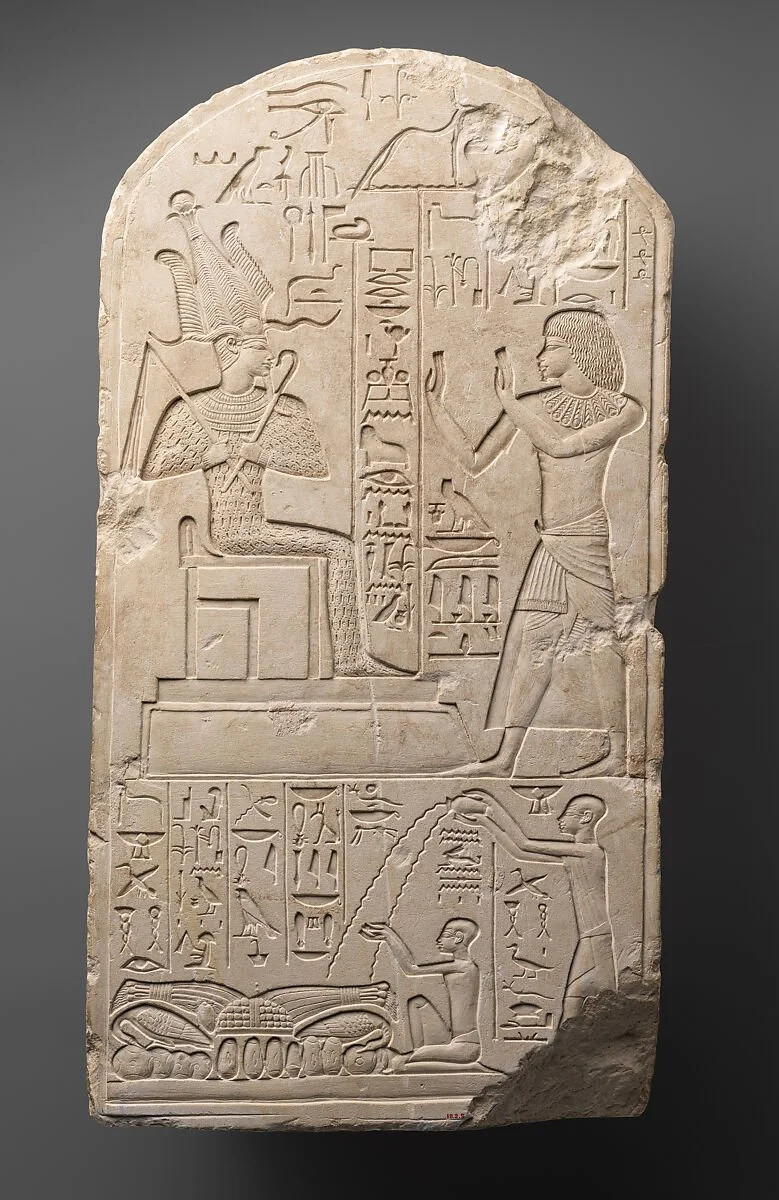
Figure 8. Stela of Senu Adoring Osiris, New Kingdom, ca. 1390–1352 BCE (from The Met)
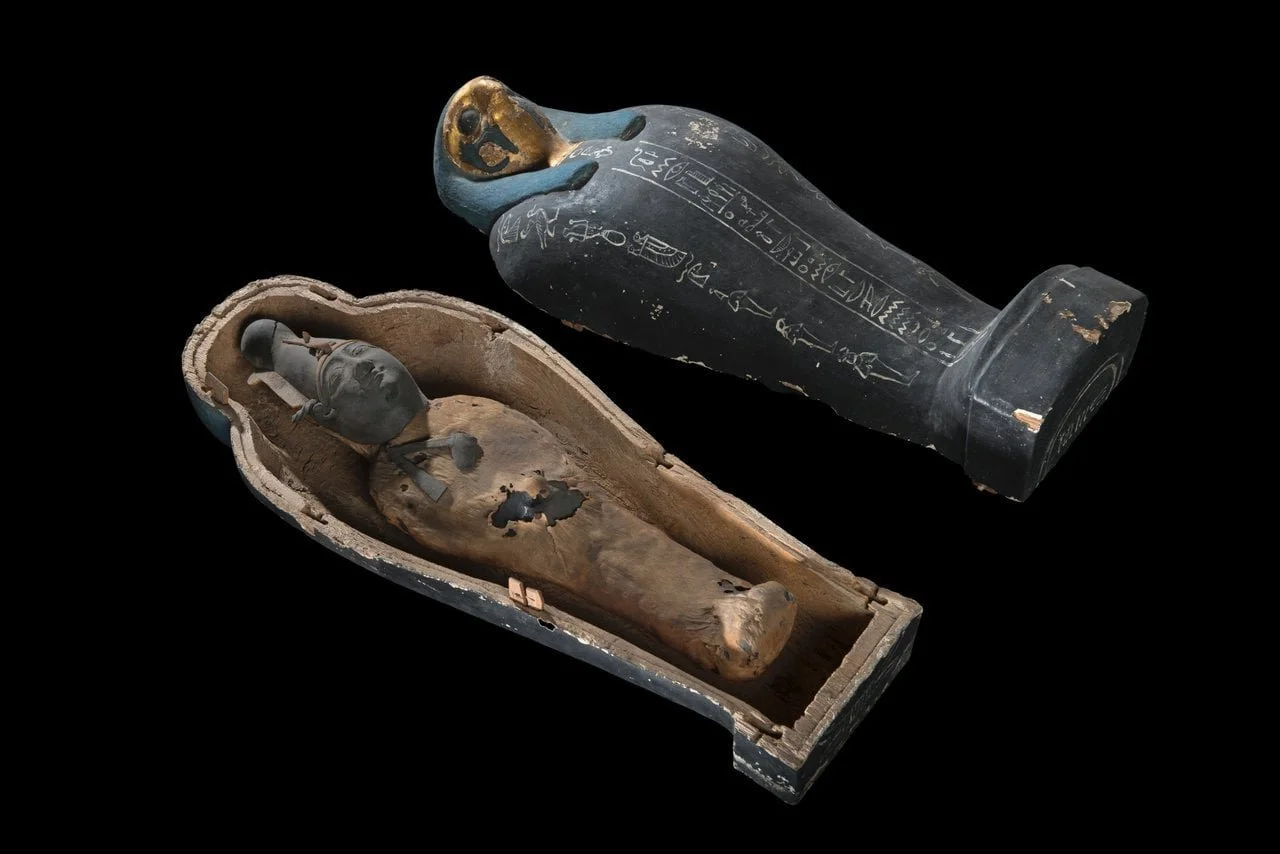
Figure 9. Corn Mummies representing Osiris from the New Kingdom or 3rd Intermediate Period.
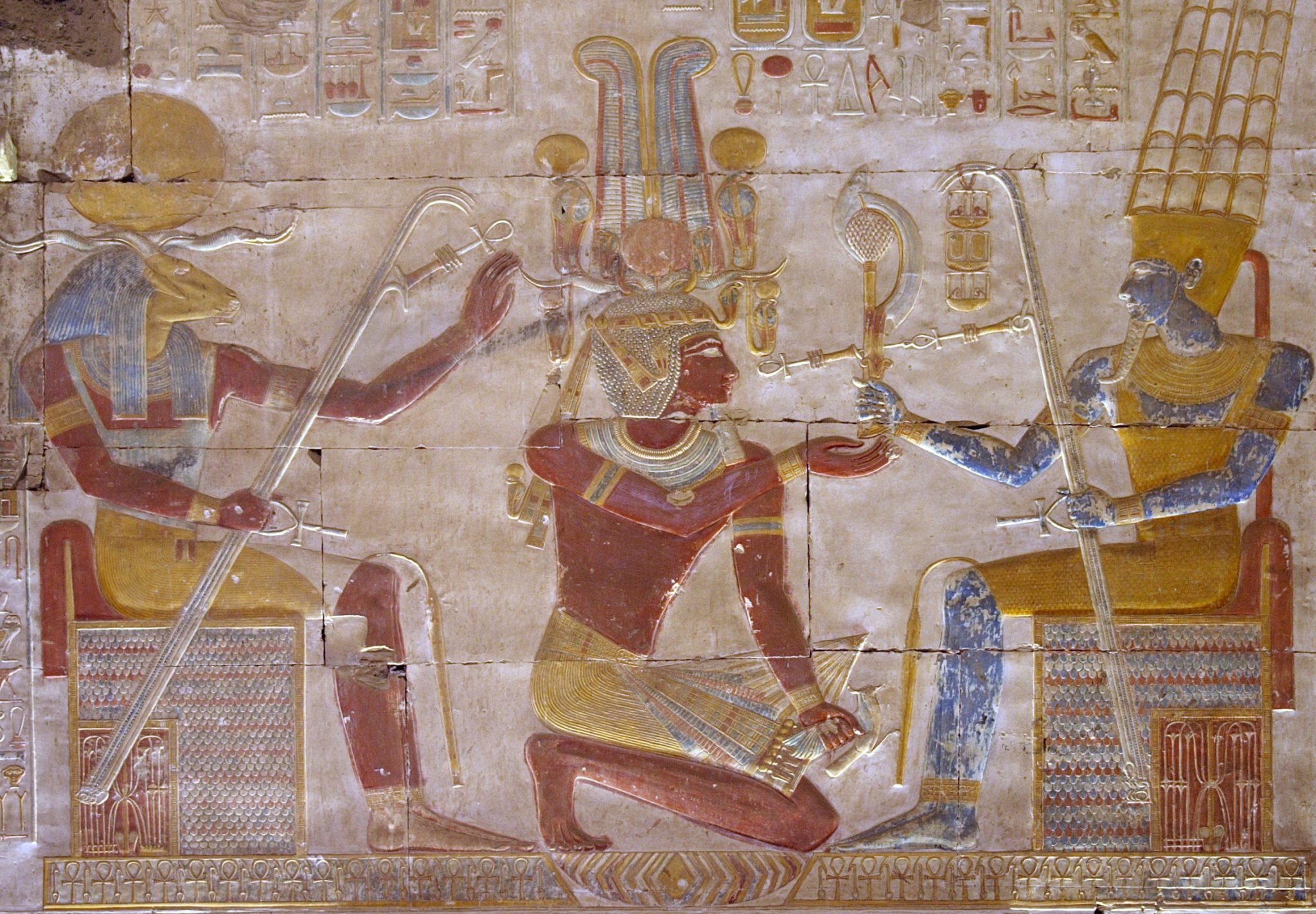
Figure 10. Seti I kneels before the god Amun, with blue skin and receives emblems of kingship conveying his authority to rule. In his left hand the king grasps a rekhyt bird, which represents the general population that is being brought under the king’s control. This elegant scene is packed with symbols of stability, life, and eternal rejuvenation, all directed at the king. Temple of Seti I at Abydos, Dynasty 19.
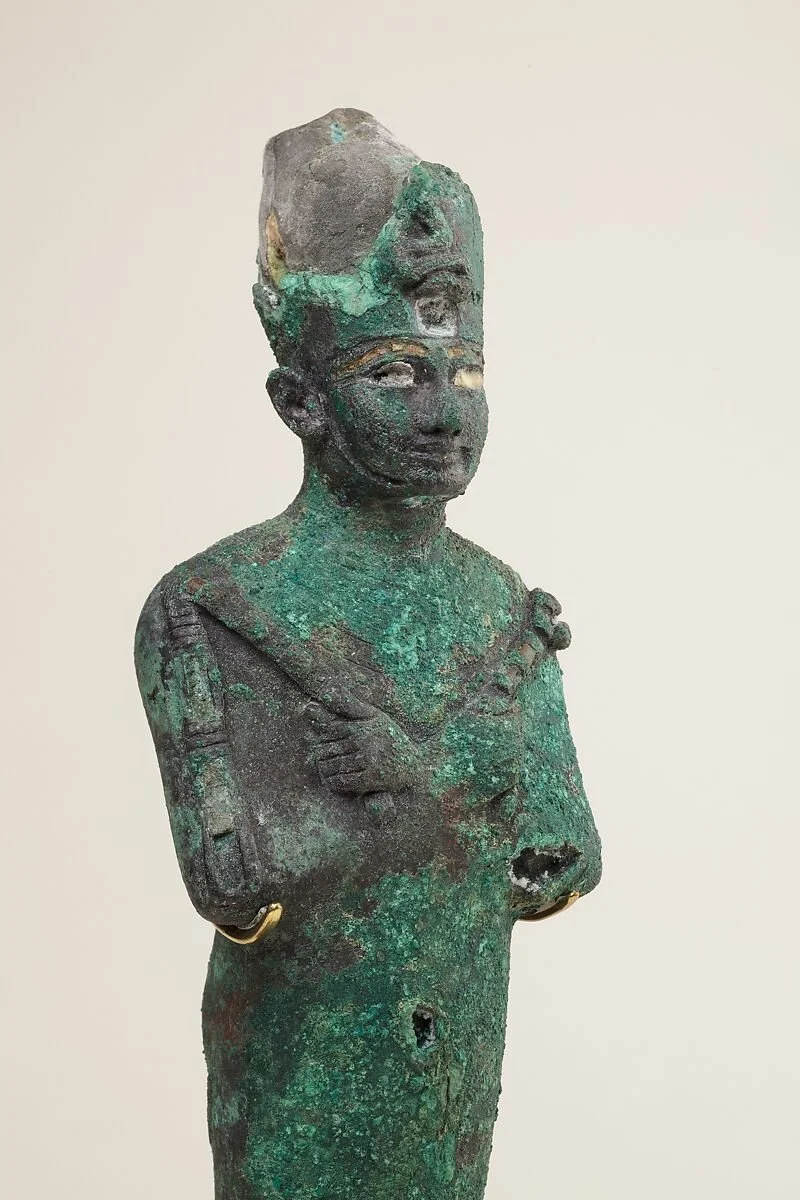
Figure 11. Osiris from the Third Intermediate Period ca. 1070–664 BCE (Photo from The Met)
Finally, during the Ptolemaic and Roman periods, from 332 BCE to 395 CE, Osiris’s influence extended beyond Egypt’s borders. Through the process of syncretism with Greek deities, Osiris appeared as Serapis, a deity revered throughout the Mediterranean region. The themes associated with Osiris—being murdered, resurrected, and offering eternal life—also served as a foundation for Christianity’s rise in Egypt. The story of a death-and-rebirth deity who grants everlasting life became a familiar pattern that influenced new religious beliefs at the time.
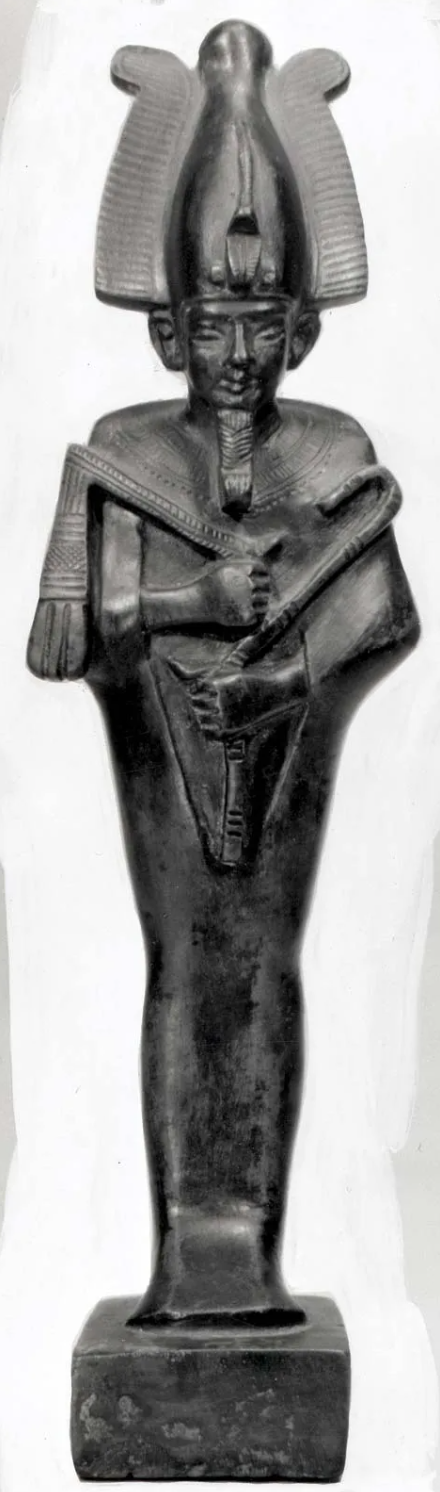
Figure 12. Osiris, bronze figurine of the Late Period; in the Egyptian Museum, Berlin (Courtesy of the Staatliche Museen Preussischer Kulturbesitz, Berlin; photograph, Art Resource, New York).
Symbolic Regalia
Beyond the mummified appearance and dark green skin, Osiris has other symbolic features that indicate his identity in art.
Pharaonic Features: He is represented as a pharaoh and is often shown wearing a pharaoh's beard.
The Atef Crown: His primary headgear is the distinctive Atef crown, which resembles the White crown of Upper Egypt but includes two curling ostrich feathers on either side.
The Crook: This symbol is believed to represent Osiris's role as a shepherd god.
The Flail: The meaning of the flail is more uncertain; suggestions include a shepherd's whip, a fly-whisk, or a connection to the god Andjety.
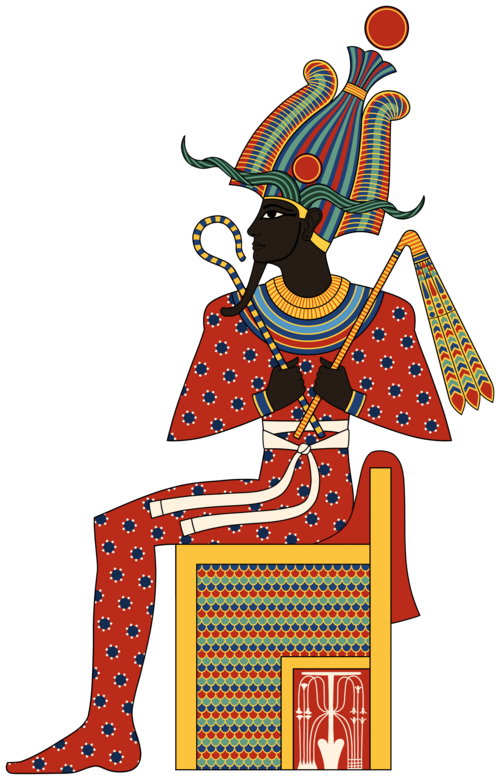
Figure 13. Osiris depict with black skin wearing the Atef crown and holding the crook and flail.
Isis
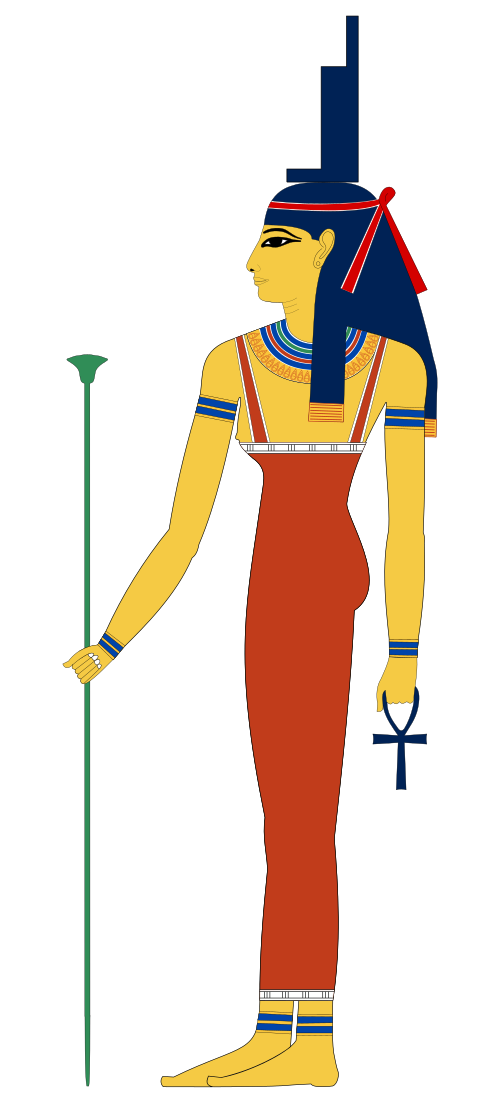
Figure 14. Aset (Isis)
Isis was a prominent goddess in ancient Egypt, celebrated for her association with magic, motherhood, healing, fertility, and protection. Her original Egyptian name, either Aset or Eset, literally means "throne," symbolising her role as the divine seat of the pharaoh's authority, as reflected in her crown. The name of this deity has several important aspects. Its symbol is the throne hieroglyph, which she often wears as a headdress, demonstrating her connection to kingship and her role as a divine ruler. The phrase "She of the Throne" or "Queen of the Throne" also reflects her status, with some scholars suggesting she originally represented the actual royal seat before becoming a major goddess.
Many Egyptologists believe that because the king's authority was symbolised by sitting on the throne, the throne itself was regarded as the mother of the king. Over time, this abstract concept developed into a divine maternal figure. Evidence from language and early texts suggests that her worship likely began in the Nile Delta region of Lower Egypt, near sites such as Behbeit el-Hagar. Initially worshipped as a local deity, she gradually gained influence across Egypt and eventually became a major goddess worshipped nationwide.

![Figure 16. Aset name in Meroitic text: Wos[a] or Wusa](https://images.squarespace-cdn.com/content/v1/6598c864ea0f89700c0e4e59/1773419648749-Y89WF92Z71F01TIZM8MB/Screen+Shot+2026-03-13+at+9.33.53+AM.png)
The name has evolved over time: in Egyptian, it is thought to be ꜣst, known as Aset, Eset, Iset, or Usat; in Coptic, it is Ēse or Ēsi; and in Greek, it is Isis, which became widely recognised internationally through the Greek rendering of the Egyptian name. When the Greeks came into contact with Egyptian culture, particularly after Alexander the Great's conquests in 332 BCE, they adapted Egyptian names to conform to their own language and grammar. In Greek, nouns often need specific endings, like -is or -s, to be grammatically correct within sentences. The original Egyptian pronunciation of Aset was probably closer to ʔŪsat or Aset, but since Egyptian hieroglyphs largely did not indicate vowels, the Greeks inserted vowels that sounded natural to them, resulting in the name Isis, which they pronounced as Ἶσις. She is also called the "Goddess of Ten Thousand Names" because she absorbed the qualities of nearly all other Egyptian goddesses, symbolising motherhood and universality. Beyond her name, she was highly revered as the great lady of magic, an ideal mother figure as the mother of Horus, and a protector of the dead, renowned for reviving her husband, Osiris. One of her most famous stories involves reassembling her dismembered husband, Osiris, and bringing him back to life as the ruler of the underworld, and conceiving her son, Horus, who seeks justice for him. Overall, Isis embodies maternal love, magical power, and sovereignty, securing her status as one of Egypt's most beloved goddesses.
Because the Greeks and Romans recorded their history and religious beliefs extensively, their versions of Egyptian gods' names became the most widely recognized worldwide as worship of Isis was widespread not only in Egypt but also throughout the Greco-Roman world, making her one of the most widely venerated deities of antiquity. While ancient Egyptians continued to call her Aset, the name Isis became common throughout the Mediterranean as her worship spread through Greece, Rome, and eventually across Europe. The Greeks employed a practice known as interpretatio graeca, which involved understanding foreign gods by equating them with their own deities. Initially, they identified Aset with Demeter, the goddess of the harvest and motherhood. Over time, however, they continued to use the name Isis because she grew in popularity and was seen as a universal goddess, worshipped beyond her original Egyptian roots.
Iconography and Appearance
The iconography of Isis typically depicts her as a woman wearing a throne-shaped headdress, symbolising her sovereignty, sometimes adorned with cowhorns and a sun disk—details borrowed from Hathor—and sometimes with outstretched wings.
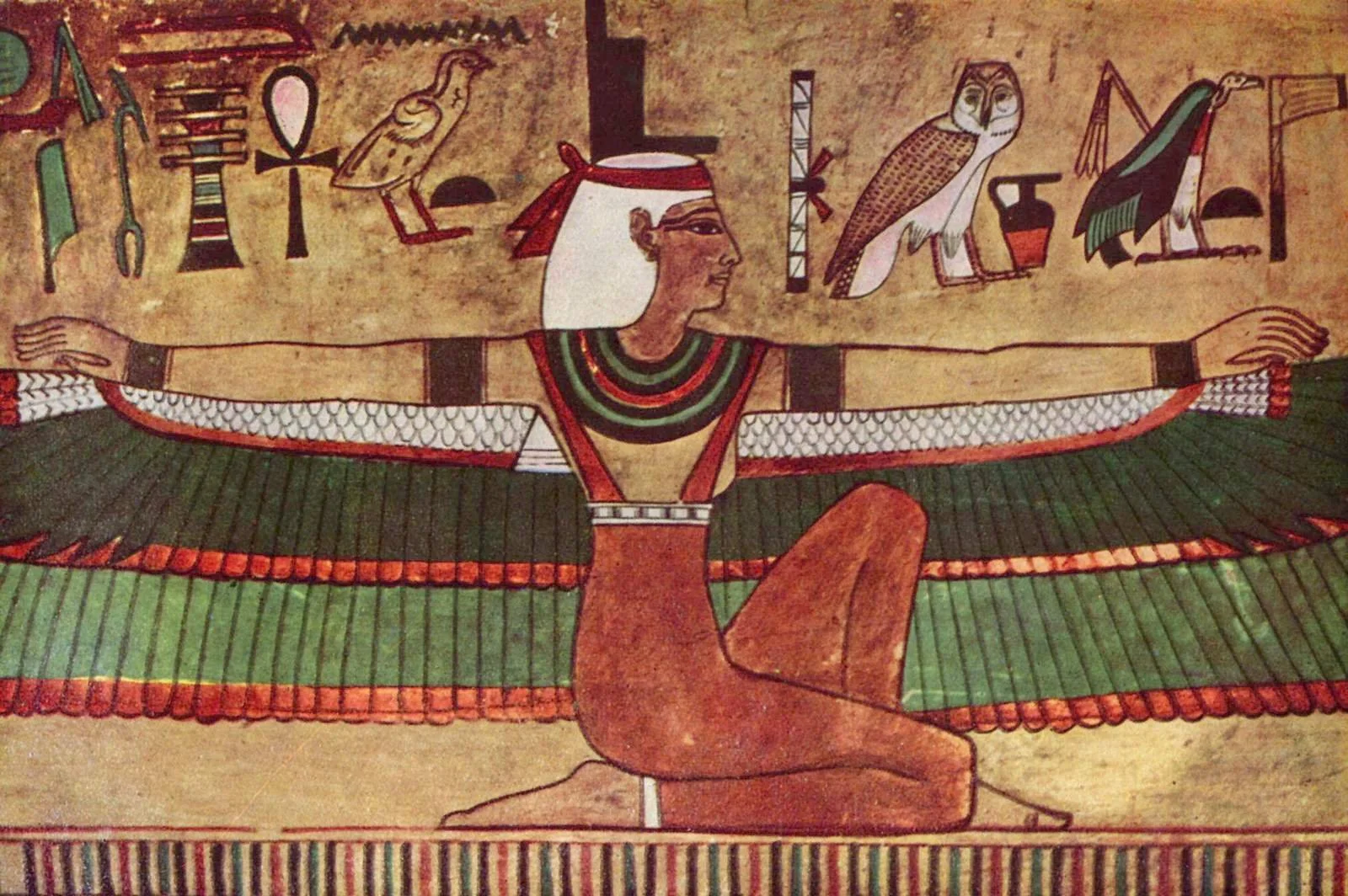
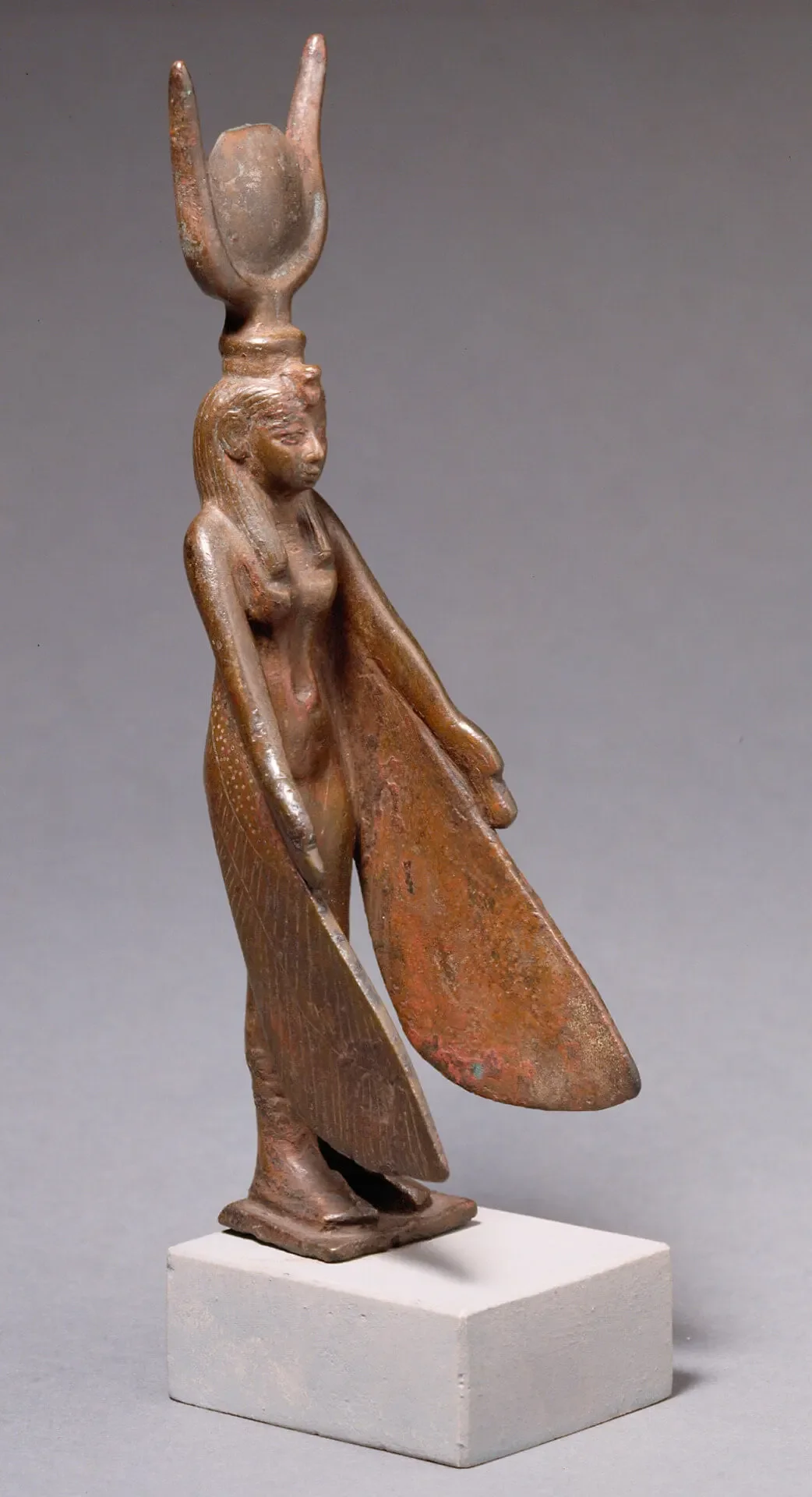
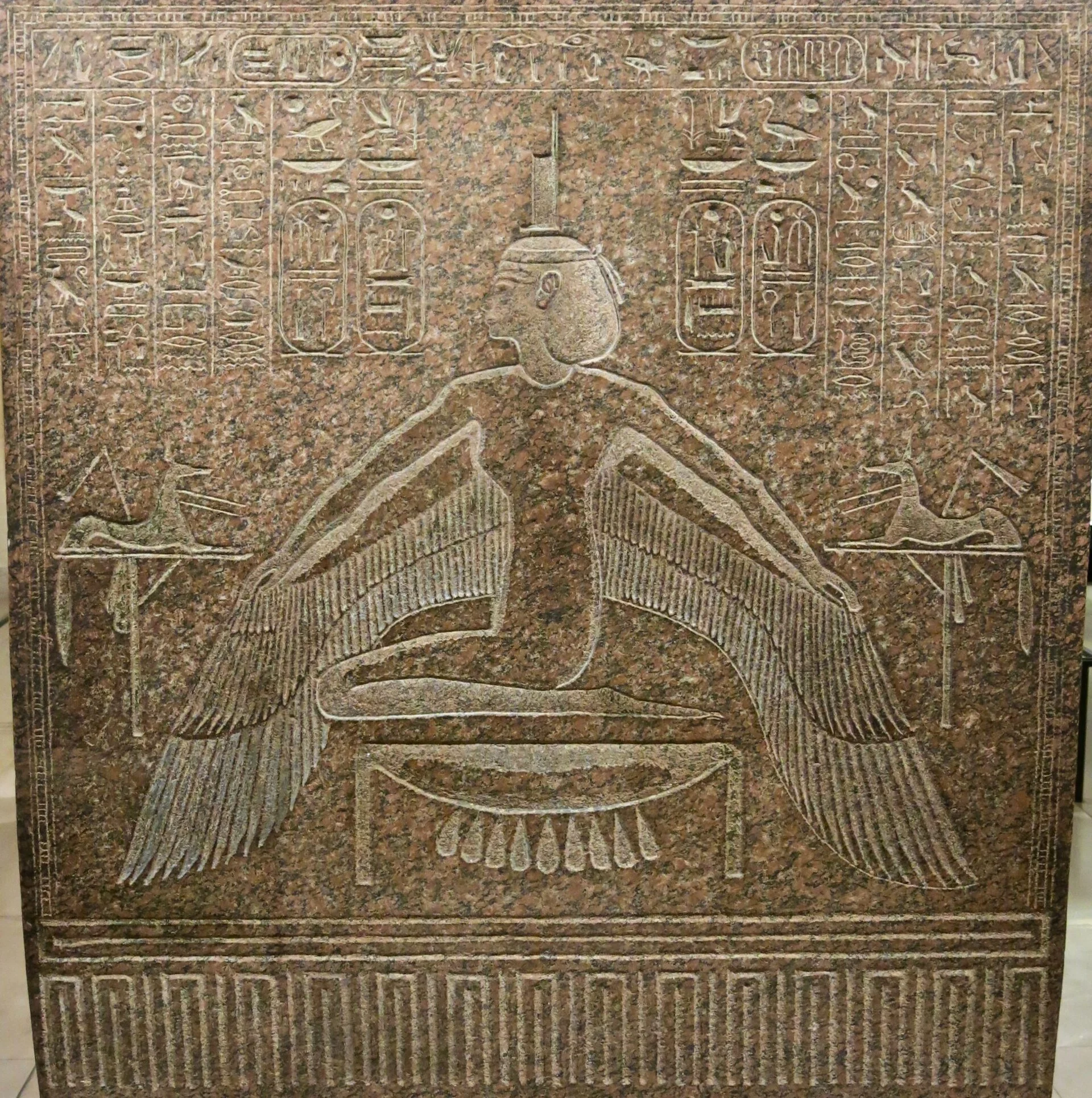

Isis first appeared as a distinct deity during the Old Kingdom (2686-2181 BCE) of ancient Egypt. Her earliest known references appear in the Pyramid Texts, inscribed in the tomb of Pharaoh Unas, the last ruler of the 5th Dynasty, dating to around c. 2494–2345 BCE. While gods such as Ra and Horus have origins dating to Egypt’s Predynastic period before 3100 BCE, the specific name of the "Isis" equivalent appears from the 5th Dynasty onward, suggesting that her prominence rose during this era. In these sacred texts, Isis is already portrayed as a key figure in the myth of Osiris, acting as the protector and supporter of the deceased king. During the Old Kingdom, Aset was primarily associated with a simple yet powerful symbol: a hieroglyphic throne worn as a headdress. She was usually depicted wearing a basic sheath dress, which symbolized her role as the seat of authority that validated the king's rule. At this time, her role was primarily supportive; she was regarded as a key figure alongside Osiris, serving as the chief mourner and protector of the deceased king in funerary texts. She was a minor yet important figure associated with mourning in royal funerals. She was not yet widely worshipped by the general public, remaining a more reserved divine figure.
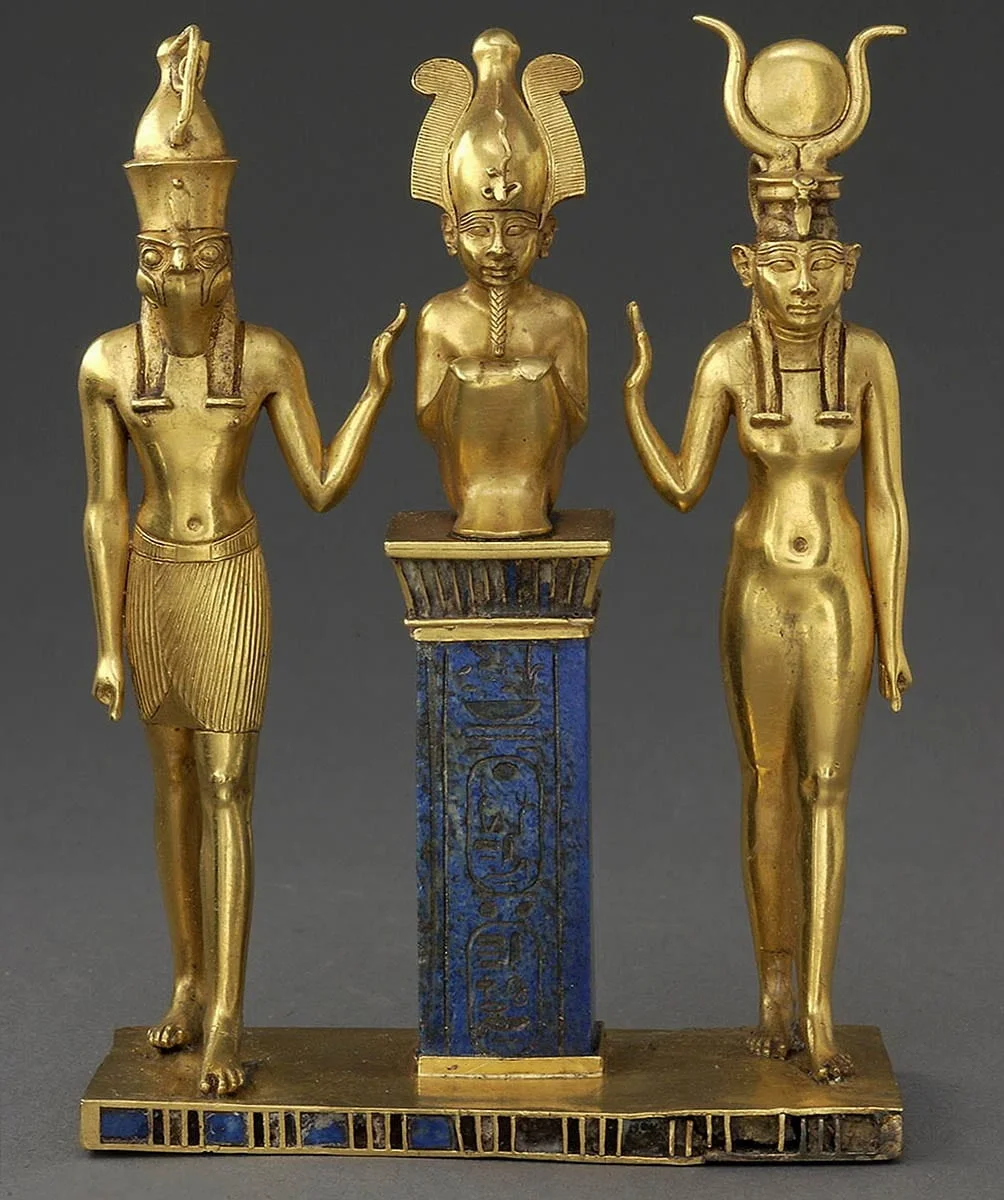
Figure 21. Horus, Osiris and Aset, gold pendant of Osorkon II, Louvre. Osiris was the first King of Egypt, Horus, the legitimate heir to the throne, Aset Queen of Egypt, Pharaoh’s mother. (Photo © Musée du Louvre / Christian Décamps)
By the New Kingdom (c. 1550 to 1070 BCE), Isis’s image grew more dynamic and inclusive, absorbing characteristics of other goddesses, especially Hathor, adopting her iconic cow horns and solar disk headdress, transforming her into a significant mother goddess for all people, not just the pharaohs. She was also frequently depicted wearing a crown shaped like a vulture and a royal uraeus— a rearing cobra—on her forehead. These elements signified her royal role and divine authority, thereby emphasising her position as a divine queen. Additionally, images in temples and on statues often depicted Isis nursing her son, Horus, or the pharaoh, symbolising her nurturing nature. Her milk was considered a powerful symbol of a king's divine right to rule. But also, as her importance grew, her images became more elaborate, featuring royal and divine attire and accessories. Another common representation shows Isis with the outstretched wings of a kite, a bird of prey. This winged form represented her role in searching for and protecting the souls of the deceased, highlighting her protective and guiding qualities.
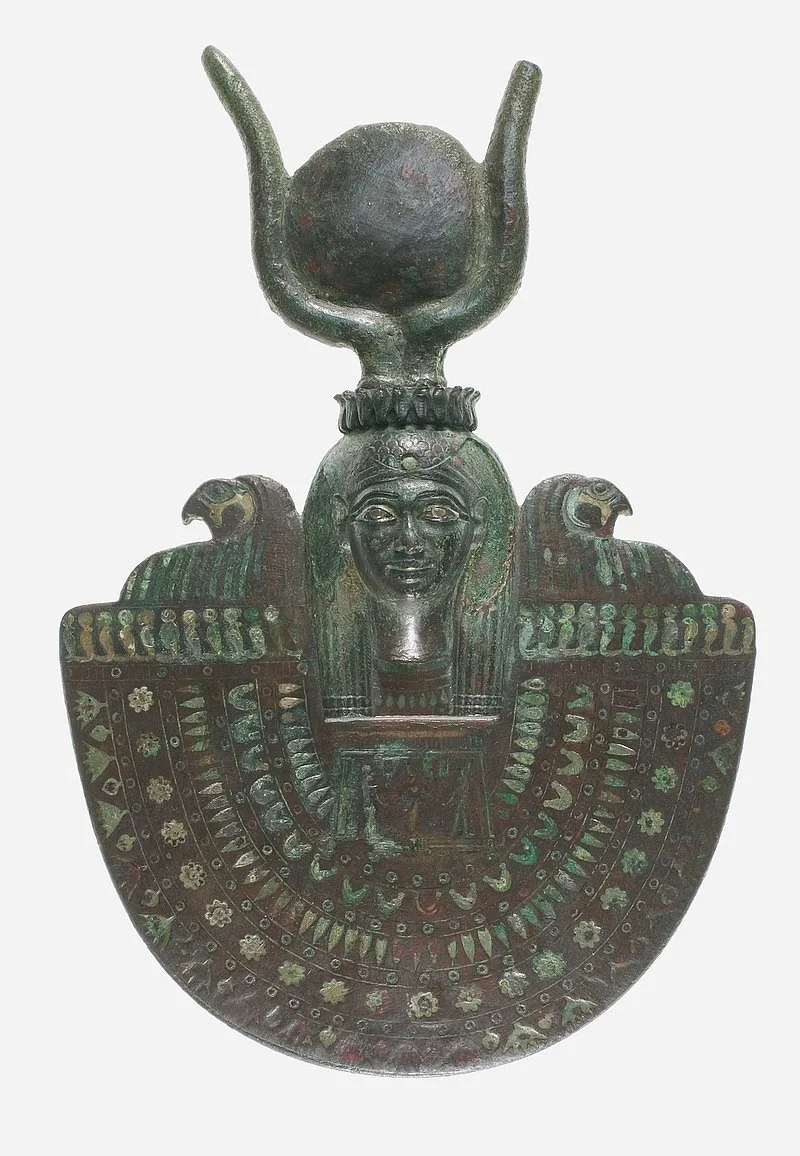
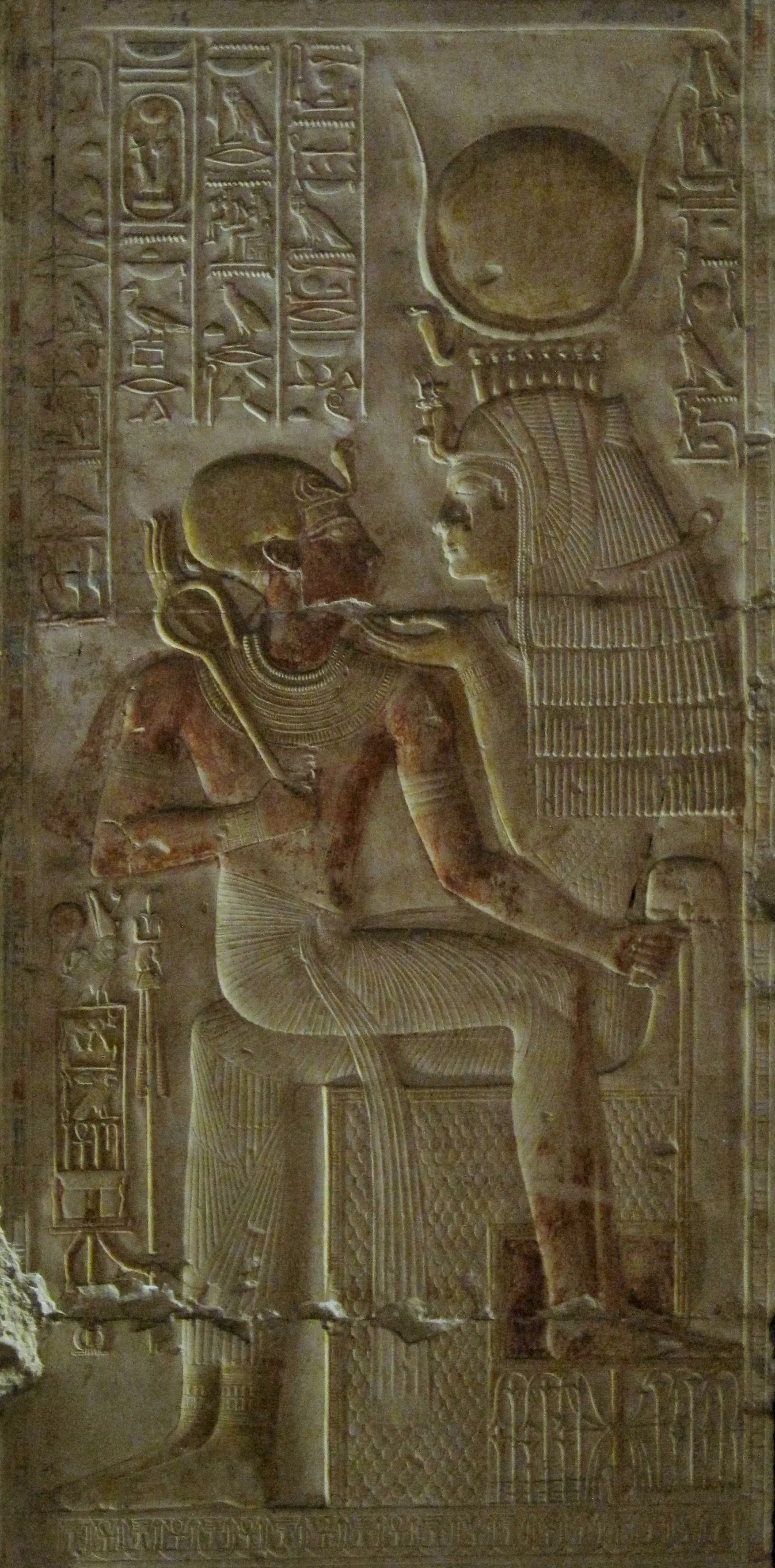
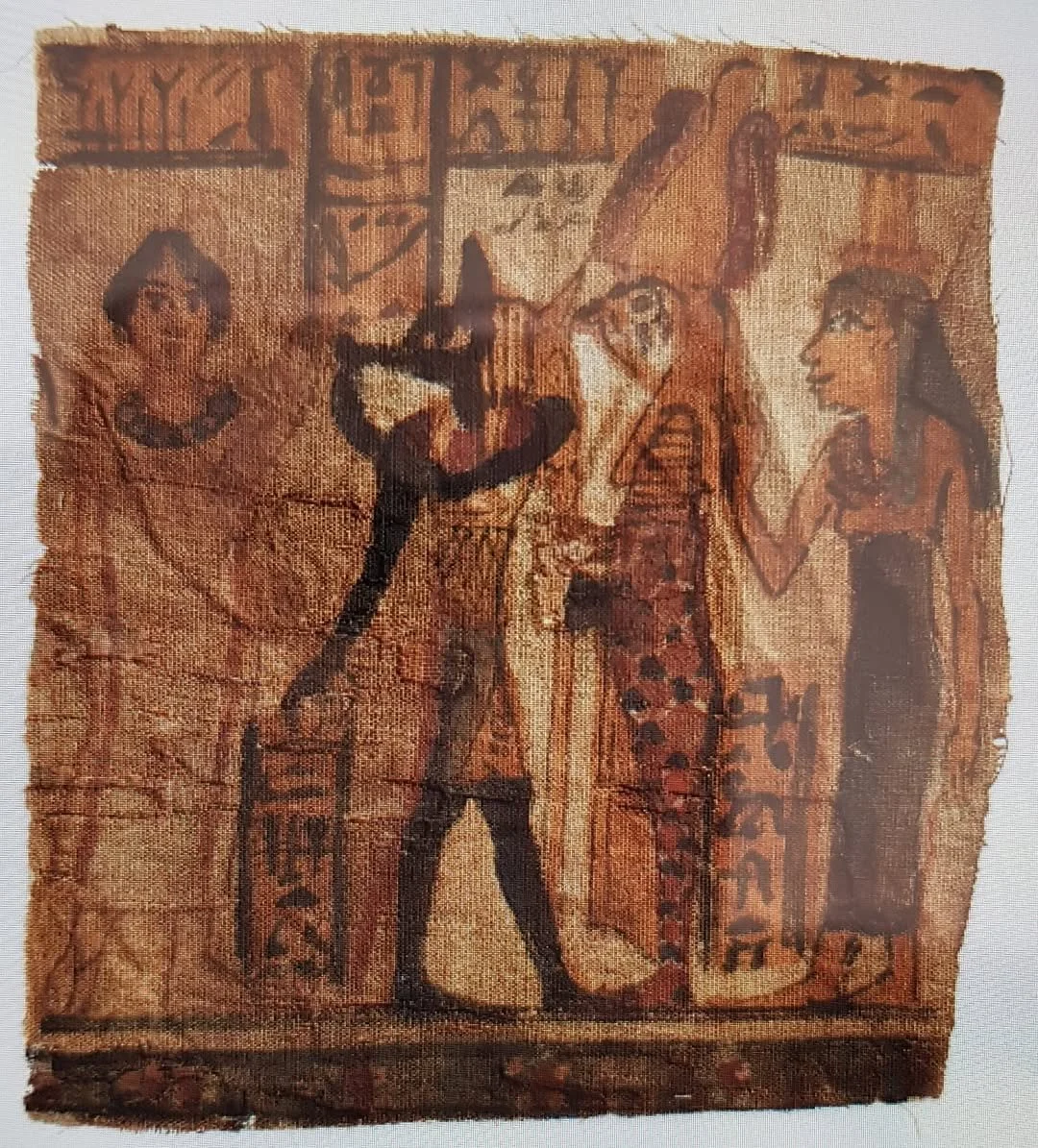
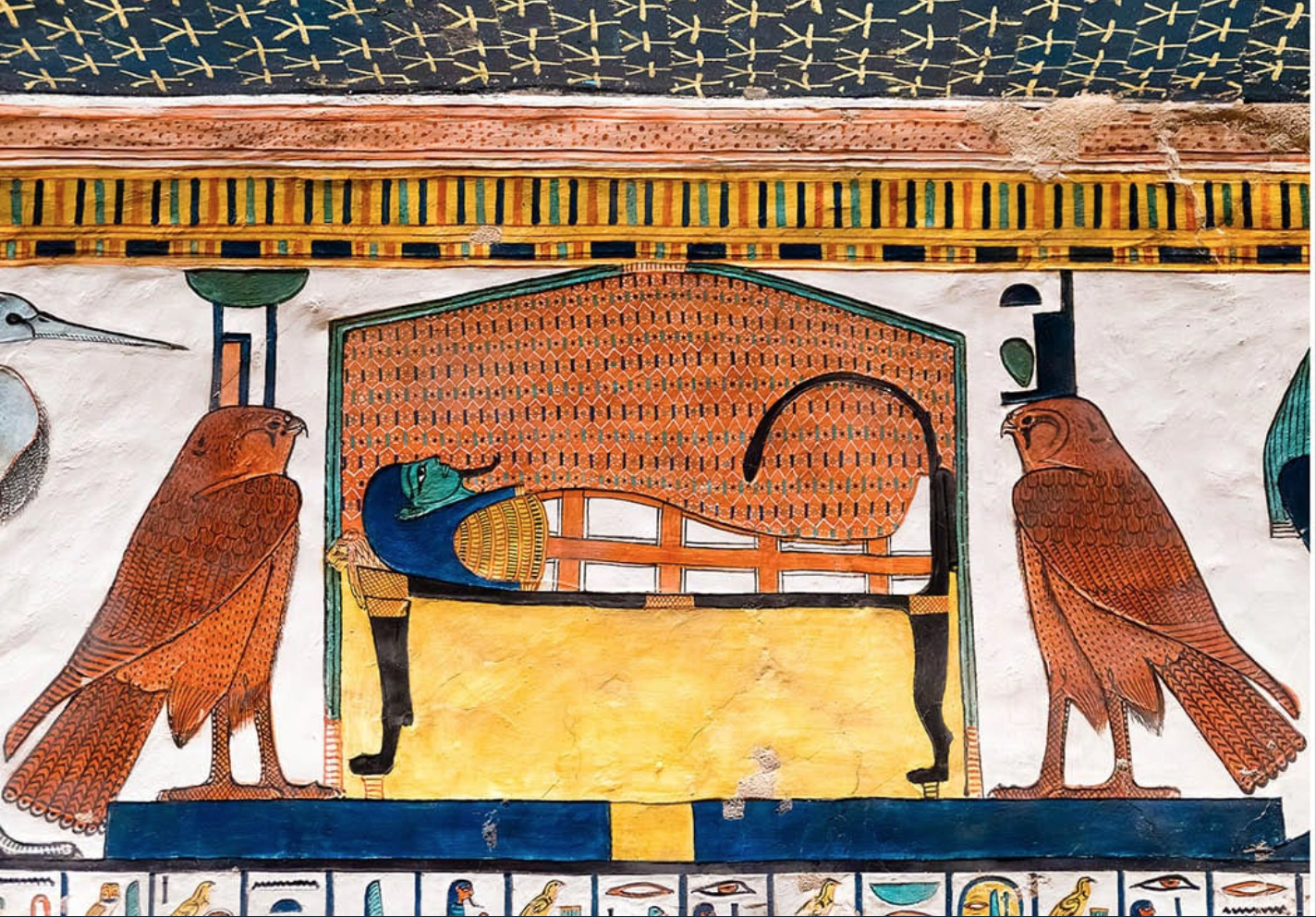
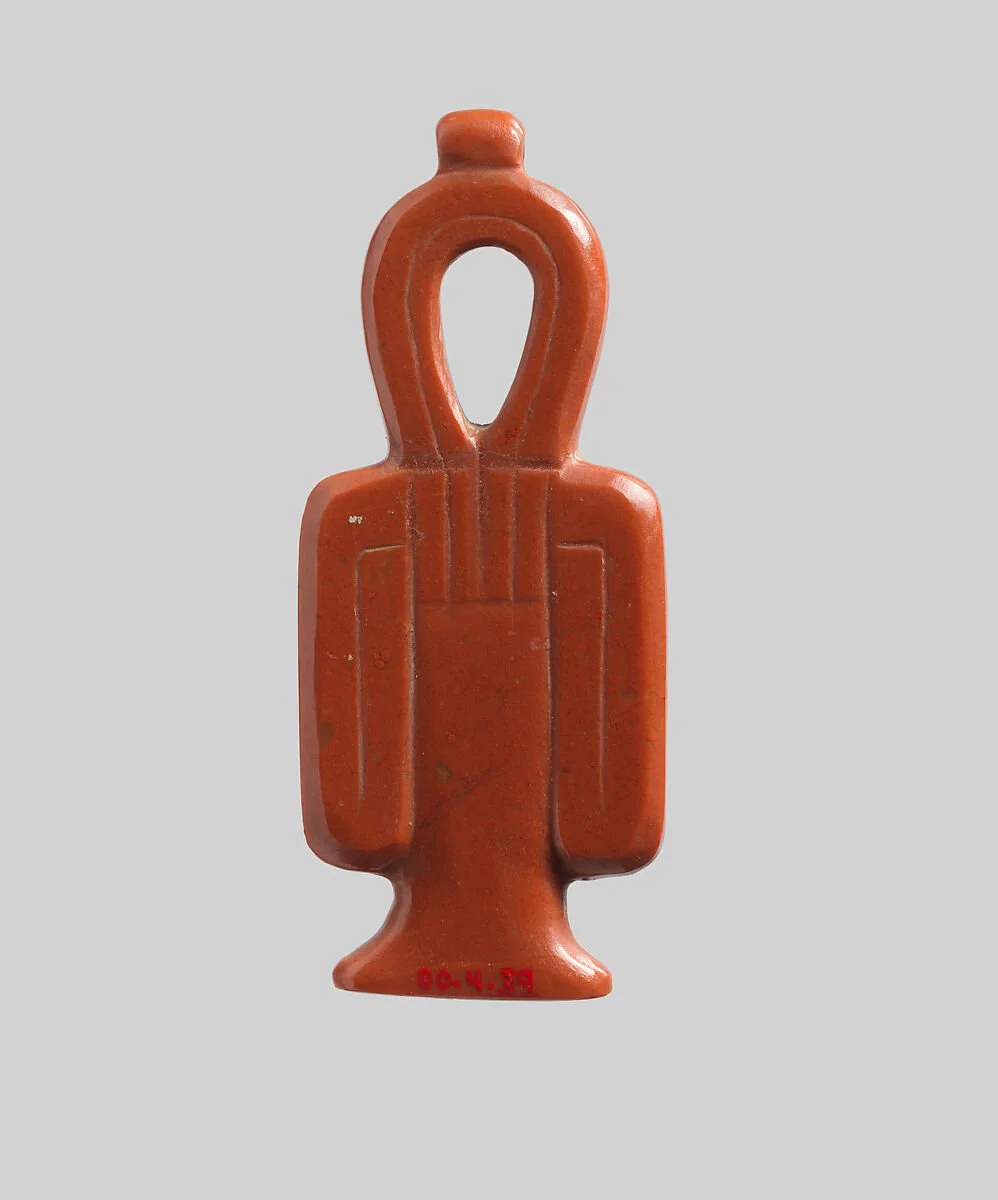
Figure 26. Tyet/Titamulet, New Kingdom ca. 1550–1070 BCE (Photo from the The Met)
This period also saw the rise of the Tyet, or the Isis Knot (Figure 26), a protective amulet often fashioned from red stone, glass, or faience. Symbolizing the protective power and "blood" of the goddess Isis, it was frequently placed on mummy necks from the New Kingdom onward to ensure safe passage in the afterlife holding her protective, magical powers and her bloodline (The Met). Her reputation expanded dramatically during this time; she was recognized as a goddess of powerful magic, or Weret-Hekau, and became a protector of the sun god Re. Moreover, Isis’s influence extended beyond royalty, making her a healing goddess worshipped by all Egyptians. Isis’s images conveyed her multifaceted role in Egyptian religion and her significance as a divine figure within Egyptian culture through these various symbols.
During the Ptolemaic period, from 332 to 30 BCE, Isis reached the peak of her worship as Egypt’s leading deity. The construction of grand temples, like the renowned temple at Philae dedicated solely to her, marked her as a central figure in Egyptian religion during this era.
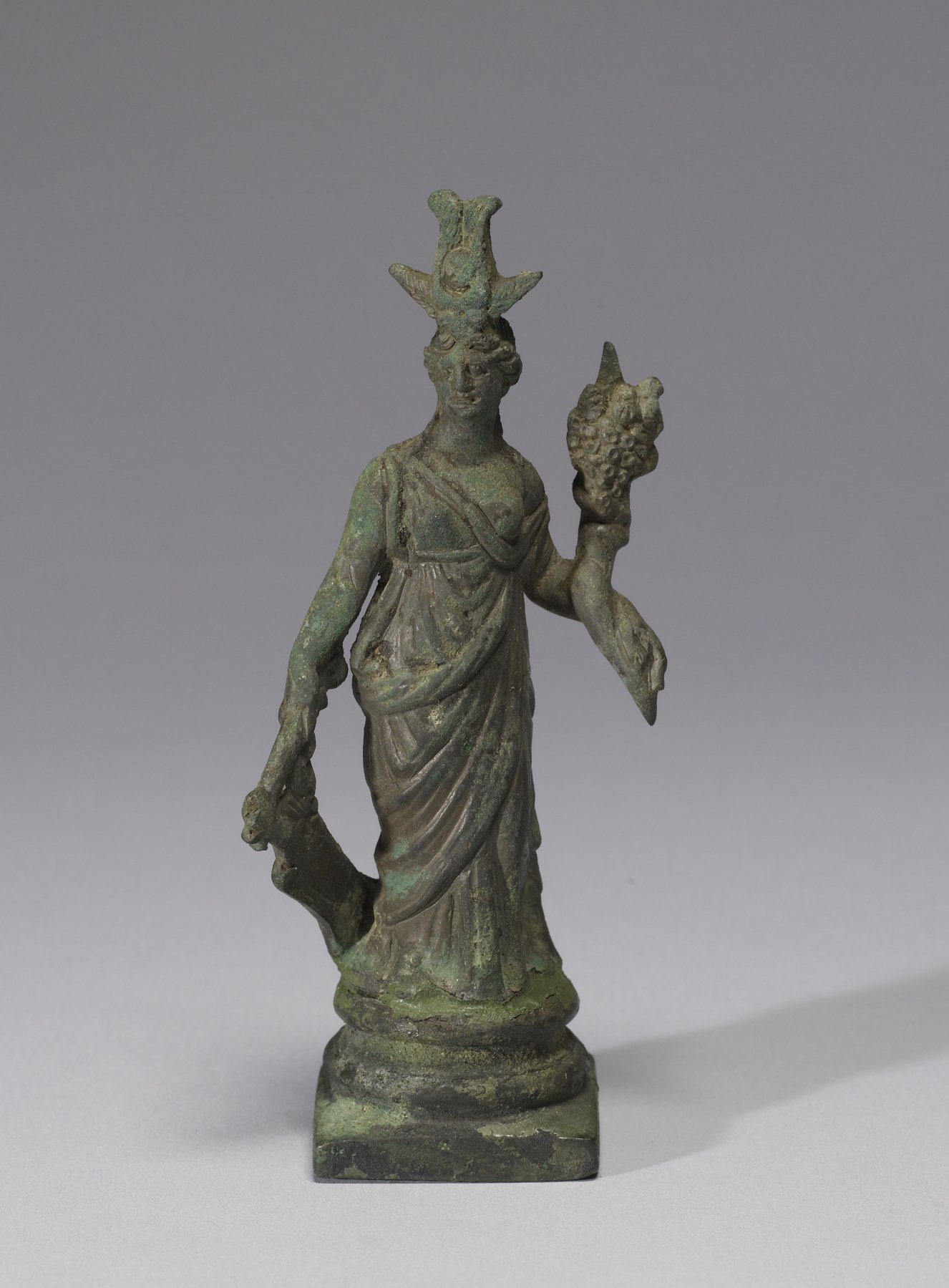
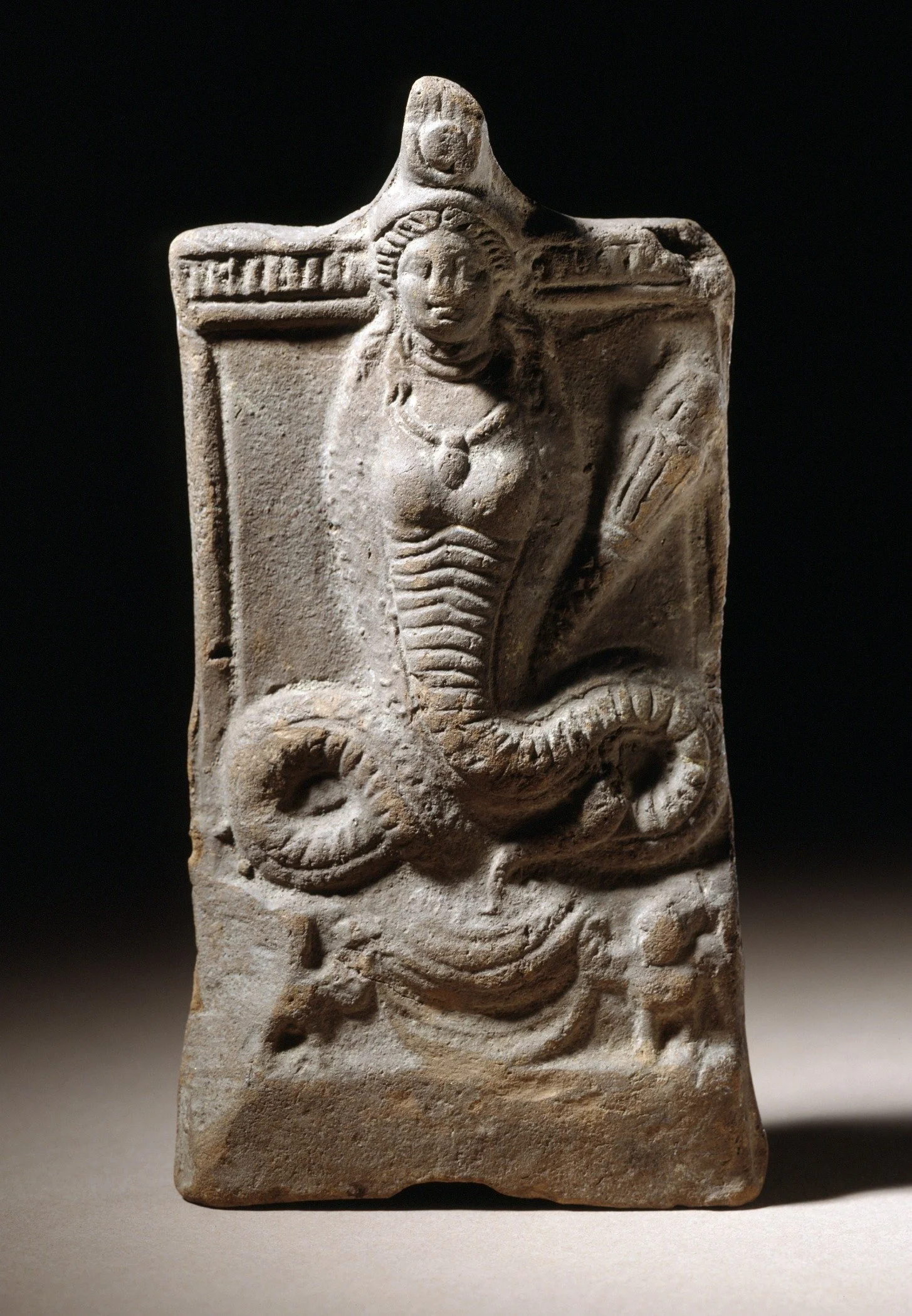
Finally, in the Roman period beginning around 30 BCE, Aset’s influence reached an international level. Her image was often merged with other cultural symbols, as in depictions such as Isis-Fortuna (Figure 27), holding a rudder and a cornucopia, or Isis-Thermutis (Figure 28), with a serpent's tail. In Rome, her cult adopted a signature symbol: the Isiac Knot—same as the Tyet knot—tied between her breasts, and she was often shown holding a sistrum, a musical rattle. This is when her status was elevated to that of the "Goddess of Ten Thousand Names," a universal deity overseeing fate and natural forces. Her worship extended beyond Egypt, reaching Britain and Germany, reflecting her status as a truly global goddess.
Cultural and Mythological Importance
Isis played an important role, assuming various forms and functions. Originally associated with funerary practices, she later became known as a powerful protector of the nation. People believed she was even more effective in battle than millions of soldiers combined, and she was often shown supporting rulers by helping them defeat their enemies. This made her a symbol of strength and protection. In addition to her protective role, Isis was also famous for her magical abilities. People called her "more clever than a million gods" because her magic was reputed to be so strong that she could outsmart her rivals, like the god Set. She was even believed to have the power to compel the mighty sun god Re to reveal his secret name, a sign of great magical mastery.
As she was worshipped throughout the Mediterranean region and wider Roman world, people saw her as a universal goddess who ruled over the fate and destiny of all beings. She was also regarded as a giver of rain and fertility, essential for the growth of crops and the natural world. This expanded her role from a local goddess to a divine figure associated with the natural forces that sustain life.
Origin - Family
Both characters belonged to the same family. Osiris and Isis were the dual roles of brother and sister and husband and wife (making incest something to strive for among Egyptian royalty), parents of Horus, and the son and daughter of Geb (Earth) and Nut (Sky). They are either 2 of 4 siblings or 2 of 5, depending on whether Horus the Elder is included. Osiris and Isis’s son together would, of course, be Horus the Younger.
Anubis, as the son of Osiris and Nephthys, was primarily recorded in myths that solidified during the Middle Kingdom (c. 2055–1650 BCE). While earlier Old Kingdom texts sometimes associated him with Ra or Bastet. The shift in theological focus during the Middle Kingdom saw Osiris rise as lord of the dead, making him the father of Anubis. Set’s wife Nephthys, who was afraid of his wrath and likely attracted by Osiris's beauty, disguised herself as Isis and seduced the great king, becoming pregnant with the god Anubis. (Mark 2016) Though this also makes Osiris look like a total douche for having an affair against Isis (the mistress of magic and the most powerful god in the pantheon - she knows Re’s true name, that’s another story). Then, leaving her to face Set alone, I don’t know any myths of Osiris defending her.
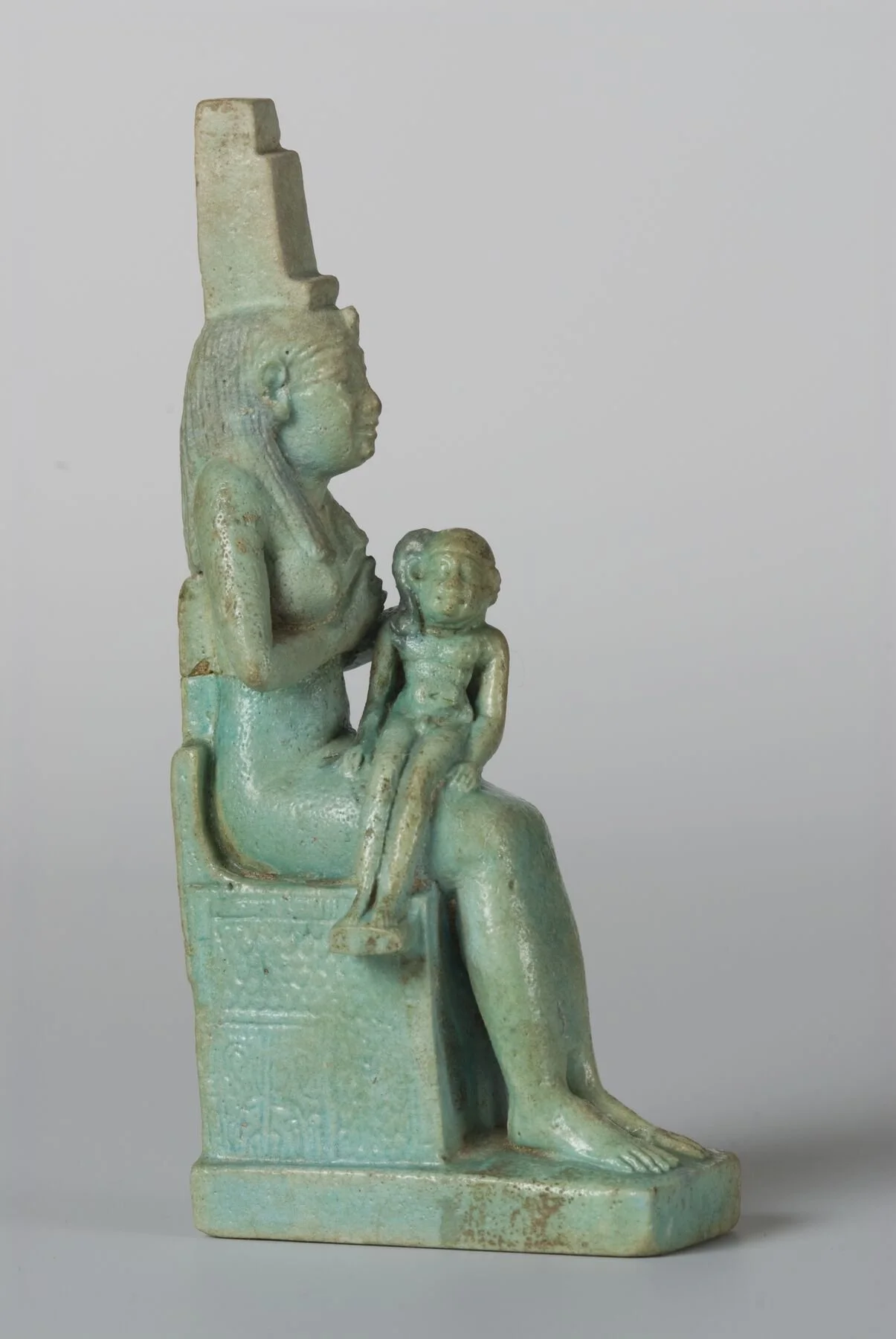
Myths of Connections between Osiris and Isis
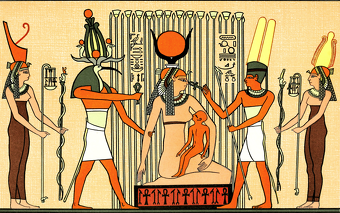
In the Old Kingdom of the first millennium BCE, Osiris and Isis emerged as the most popular Egyptian gods, central figures in a myth in which Isis revives her slain brother and husband, Osiris, the divine king. She also oversees her own birth and the safeguarding of his son/successor, Horus. It was believed that Isis aided the deceased in entering the afterlife, just as she did for Osiris, and she was regarded as the divine mother of the pharaoh, who was often associated with Horus.
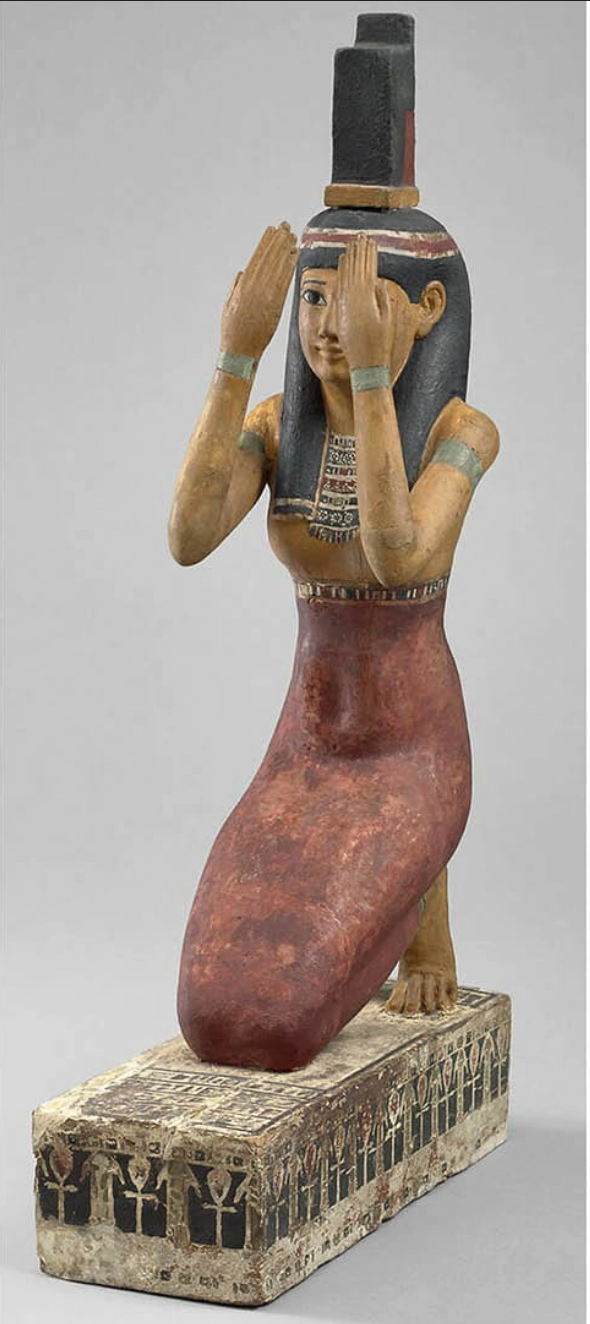
Figure 31. Kneeling Goddess Isis. Ptolemaic Period, ca. 332-30 BCE. Tomb of Ankh-hor (TT414), El-Assasif, Thebes. (Now in the Louvre. N4130).
Early Origins and Cult Centers:
It is unclear if Isis was featured in the earliest myths regarding Osiris and Horus. At major cult centers like Abydos, her role remained marginal until the New Kingdom. But by then, Isis was fully integrated into the "true divine family" alongside Osiris and Horus.
Role in the Osiris Myth:
The Pyramid Texts describe her searching across Egypt for the body of Osiris after he was killed by his brother, Set. She is credited with reassembling Osiris's scattered bones and using spells to save his body from putrefaction. Along with her sister Nephthys, she became the mythological "prototype" for all mourners.
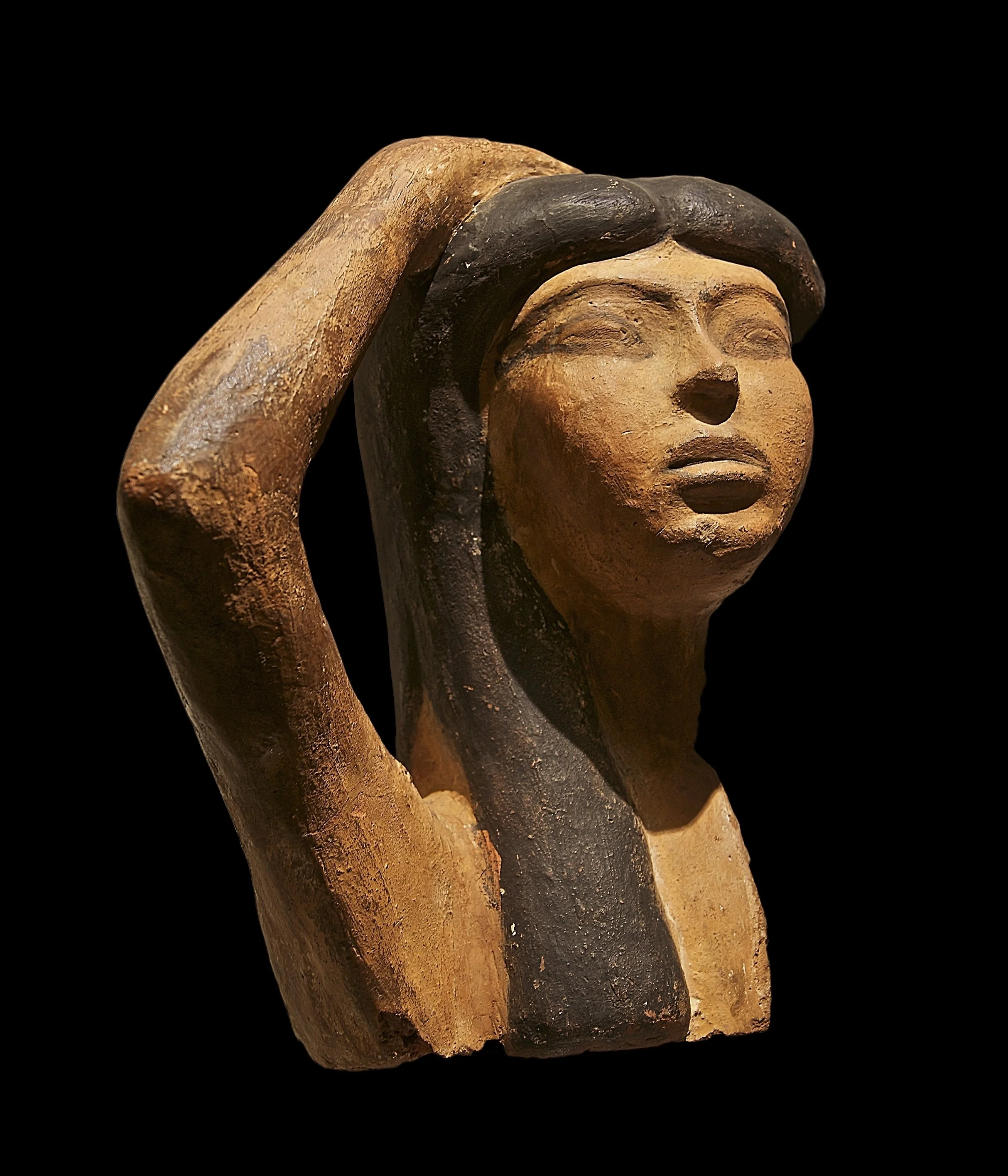
Figure 32. A rare sample of Egyptian terra cotta sculpture which may depict Isis mourning Osiris. The sculpture portrays a woman raising her right arm over her head, a typical gesture of mourning. 15th or 14th century BCE. Louvre, Paris.
Magical Prowess and the Conception of Horus:
New Kingdom hymns highlight her use of "spoken magic" to protect Osiris's body and drive away Set. She is depicted as having the power to produce life without an active partner, either by stimulating the "inertness" of the deceased Osiris to conceive Horus, or, according to the Coffin Texts, by a "flash of divine fire". After a lengthy pregnancy of about ten months, she gave birth to Horus, often called 'Horus, son of Isis' to distinguish him from other deities.
As the protector of Horus, she hid him in the marshes of Chemmis (Khemmis) shielding him from Set, sometimes associated with the ancient city of Chemmis (modern Akhmim) in Upper Egypt. This sacred site in Egyptian tradition is located in the Nile Delta of Lower Egypt and served as a refuge that protected Horus from Set. She raised him there to prepare him to seek revenge for his father. The site is often described as a floating island, capable of moving to hide from Set, or as a dense papyrus marsh near the ancient city of Buto (Figures 33 & 34). It is renowned as the place where Isis hid and nurtured her son Horus,. The location’s religious importance includes its association with the god Min and the presence of a temple dedicated to "Horus of Chemmis" (Harkhebis). Symbolically, the area appears as a dangerous, thick, and inaccessible thicket, representing protection from threats for the young god.
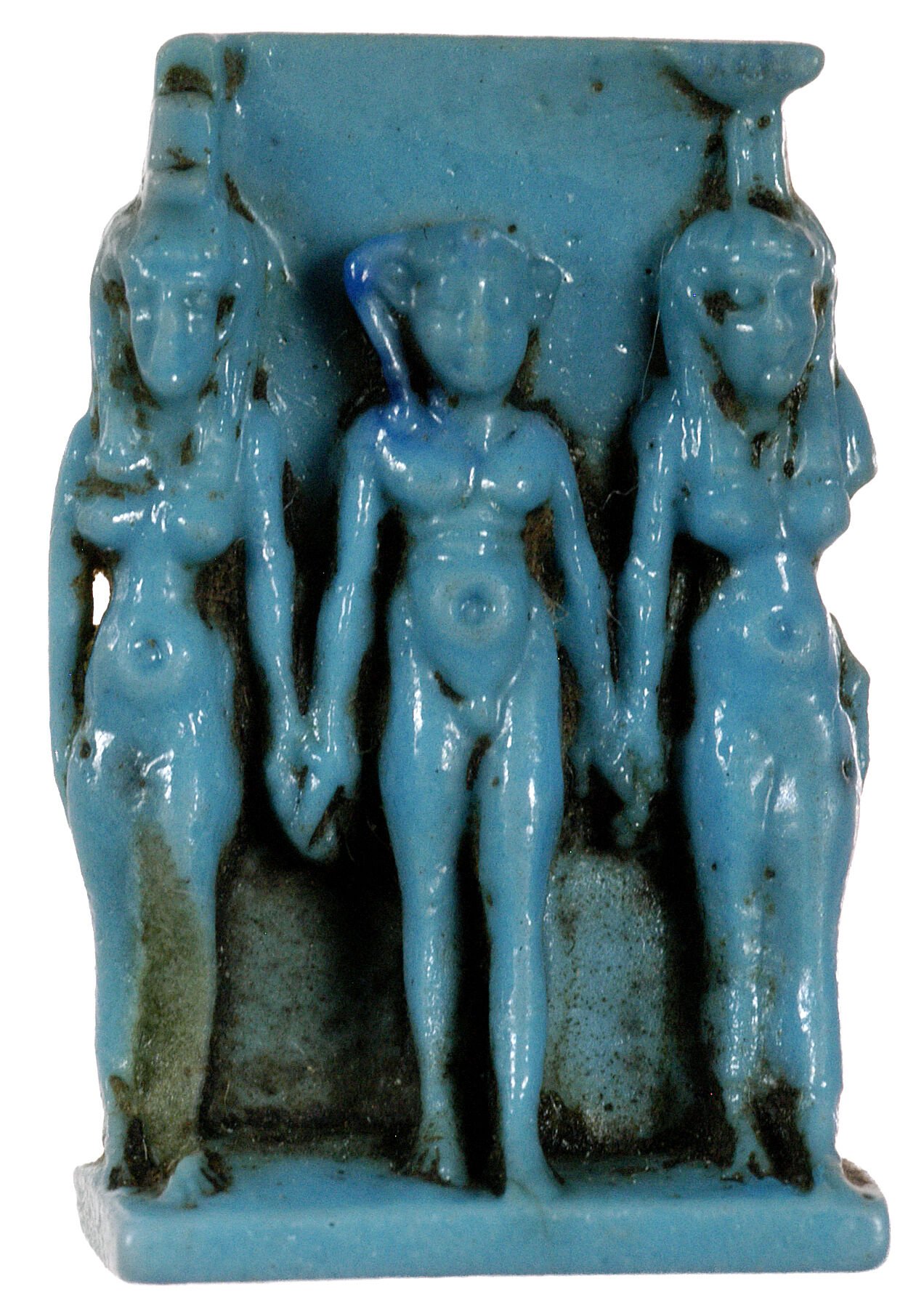

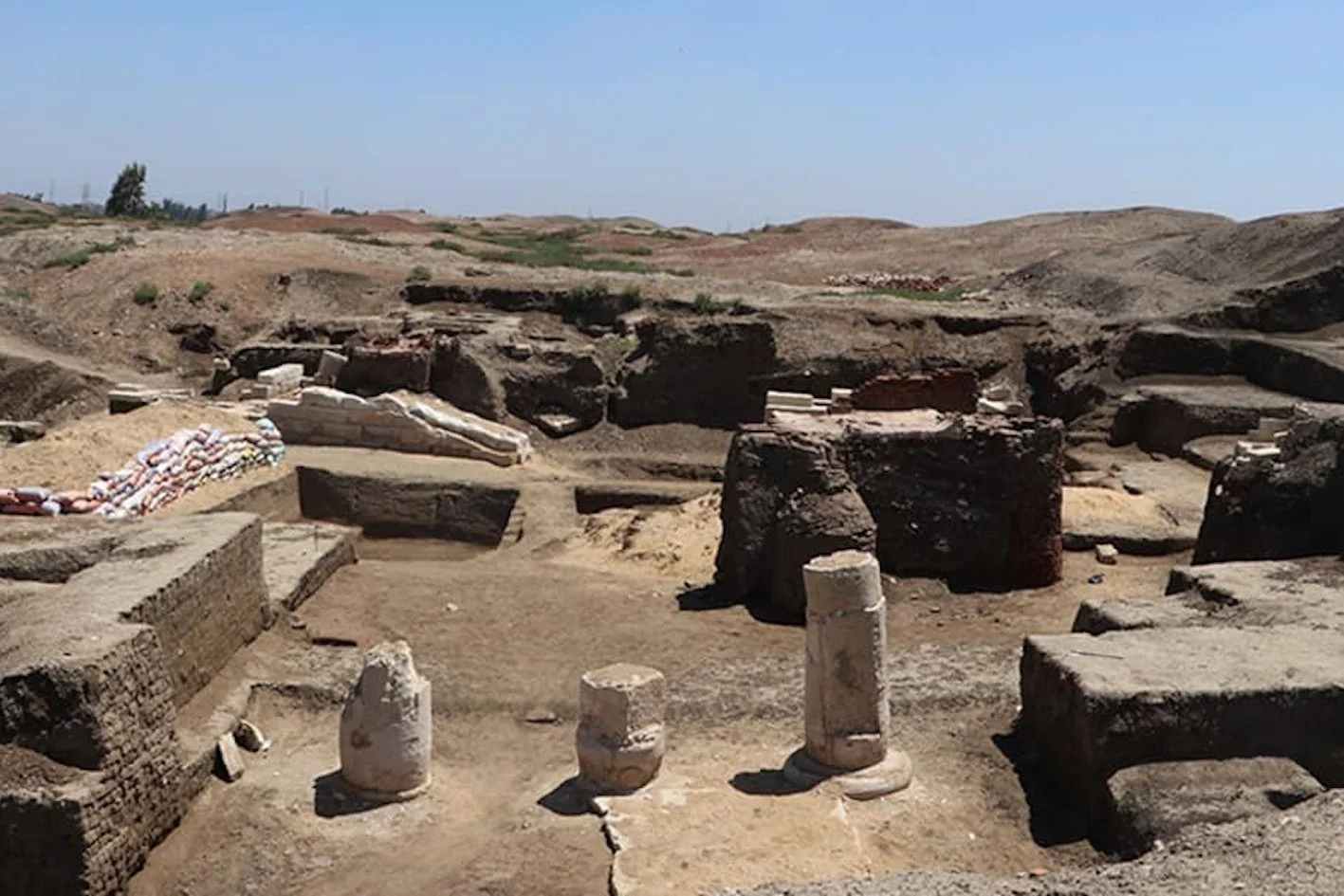
Conflict and Intervention:
In the narrative of the Contendings of Horus and Set, Isis is portrayed as a figure torn between love and kinship, intervening in their battles (sometimes in the form of a hippopotamus) to influence the outcome.
Myth with Set-Buried alive
Set decided to remove his brother and commissioned a magnificent casket, the most beautiful chest ever made, crafted to Osiris' exact measurements. He held a grand feast to which Osiris was invited, and after the banquet, he told the guests he had a special surprise. He revealed the casket and declared that whoever could fit inside it most perfectly could take it home. One by one, the guests tried to fit into the casket but failed until it was Osiris' turn. He lay down in the casket and found that it fitted him perfectly. Set then slammed the lid shut and threw the casket into the Nile River.
In some versions of the story, Osiris is murdered by Set and 72 accomplices, whereas in others, he alone is responsible. Another variation is that sometimes Set is said to have murdered Osiris in the casket and then disposed of it, whereas in other accounts Osiris suffocates after being thrown into the river or after the casket is encased by the tree at Byblos (Mark 2016).
The casket containing Osiris' body floated down the Nile and out to sea, ultimately reaching the shores of Byblos in Phoenicia, where it became lodged in a tamarisk tree. The tree grew rapidly around it, encasing the casket, and Osiris was lost to the people of Egypt. In time, the king and queen of Byblos arrived at the shore, noticed the tree's beauty and its sweet scent, and ordered it to be cut down and brought to their court as a central pillar. Back in Egypt, Set had assumed the throne, and the harmonious balance maintained by Osiris and Isis was lost. Set was a chaotic and unpredictable ruler and the people turned against one another in their struggle for survival.
Isis & Osiris' Rebirth
Following this, Isis searched for her missing husband and eventually arrived at Byblos, where she endeared herself to the king and queen and became nursemaid to their young sons. As was usual when Isis mingled with humans, she was disguised as an elderly woman, and no one at court recognised that they were dealing with a goddess. Isis grew fond of the younger son, Dictys, and attempted to make him immortal by burning away his mortal qualities in a magical fire. One night, when the queen interrupted Isis during this ritual, she was horrified and screamed, startling Isis, who then threw off her disguise and revealed her true identity. The king and queen were terrified and promised her anything she wished if she would only spare them. Isis requested the tamarisk pillar, and they quickly gave it to her.
She freed Osiris from the tree and brought him back to Egypt, where she hid his body in the marshes of the Nile Delta while she gathered herbs to revive him. Worried that Set might discover the body, she asked her sister Nephthys to keep watch. Set heard that Osiris had returned to Egypt and went searching for him. He found Nephthys and tricked her into revealing where the body was hidden. Set then hacked the body into pieces and flung the parts all across the land and into the river. When Isis returned with her herbs, a tearful Nephthys told her what had happened, and together they went looking for the body parts to reassemble them. (Mark 2016)
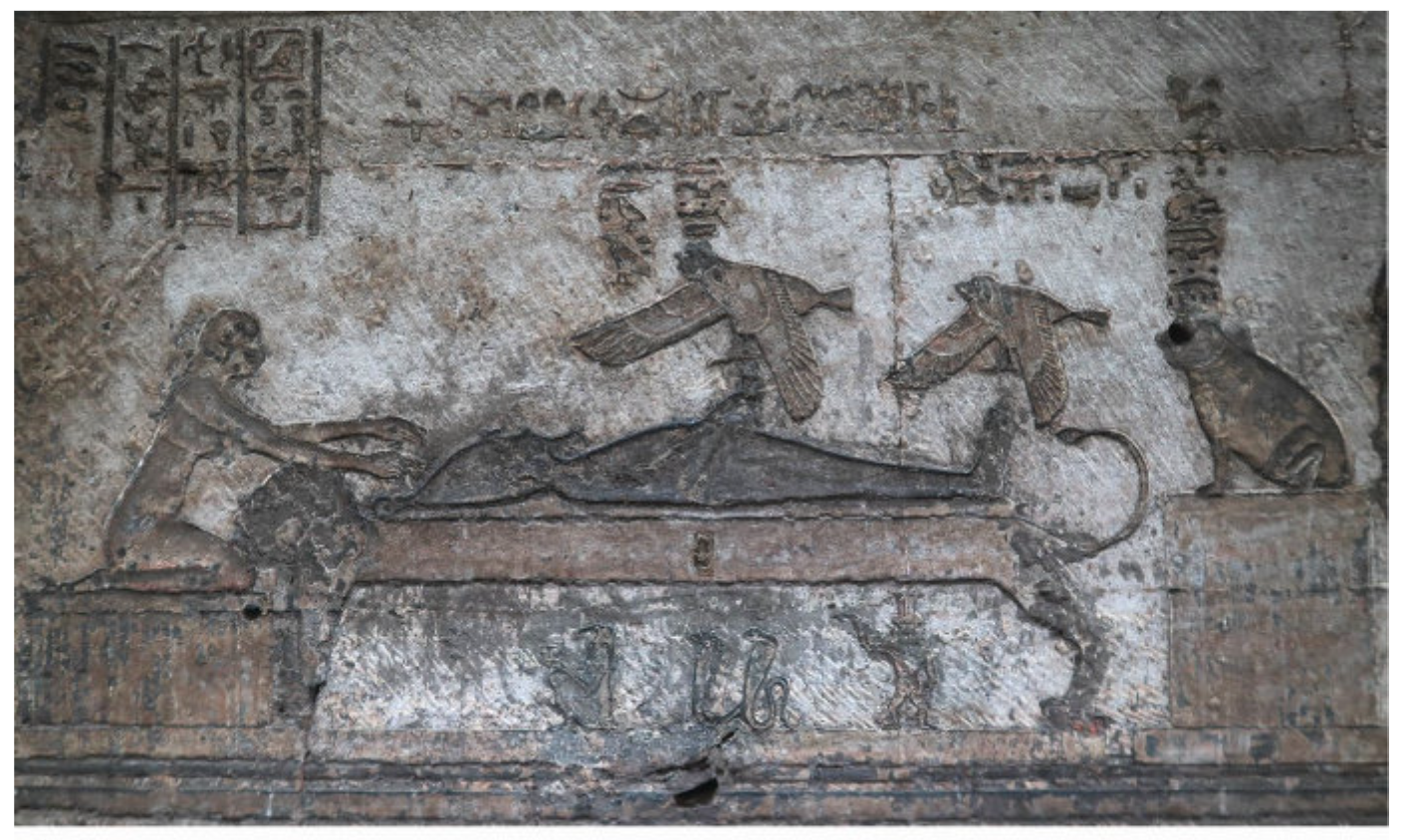
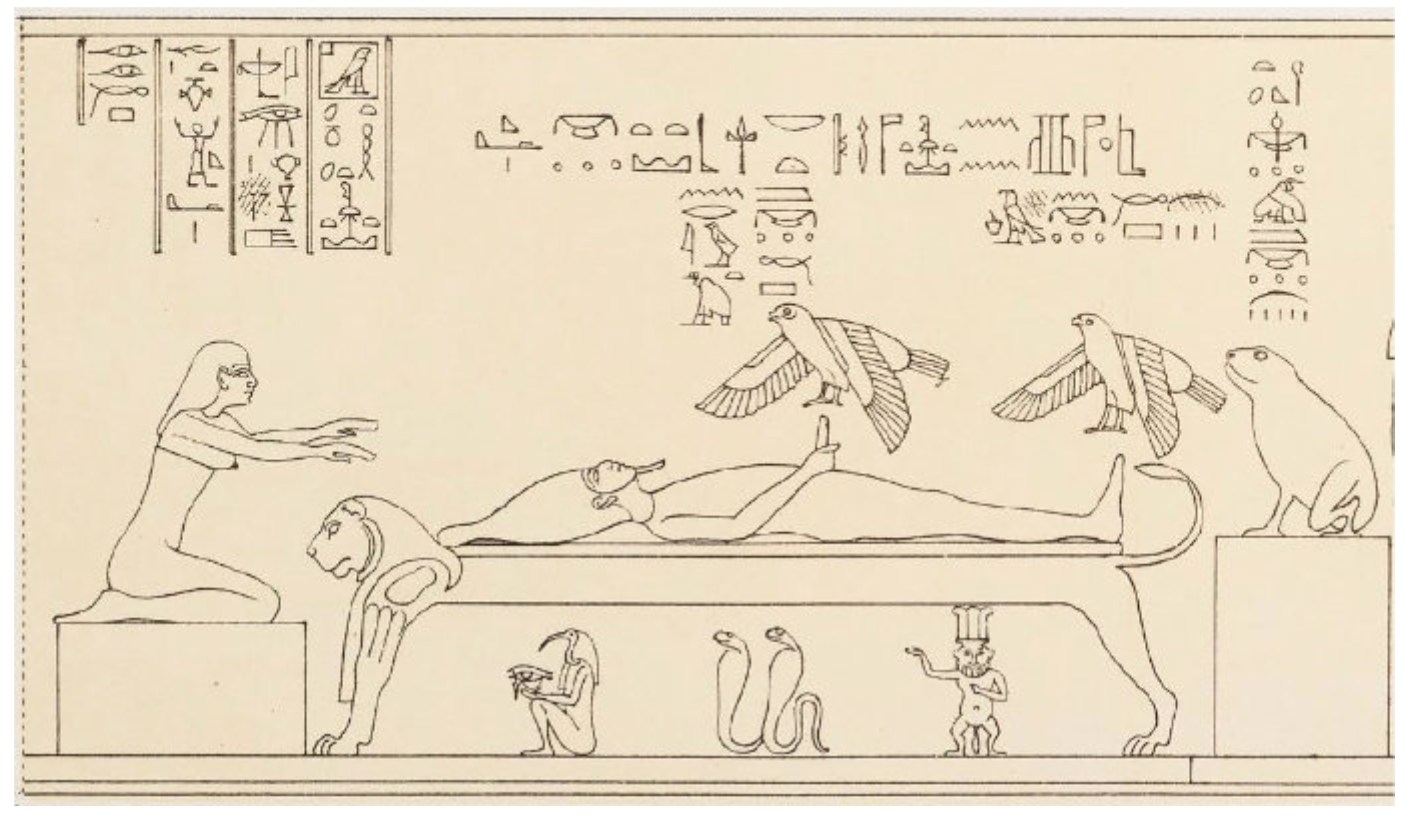
Once Isis had put Osiris back together, she found he was incomplete. His penis had been eaten by the oxyrhynchus fish and could not be recovered. Isis was still able to bring her husband back to life, but because Osiris was incomplete, he could no longer rule over the living and had to descend to the underworld. Isis transformed herself into a kite (or a falcon) and flew around his body, drawing his seed into herself and becoming pregnant with the god Horus (sometimes called Horus the Younger) (Figures 36 & 37). Osiris then journeyed to the underworld, where he became Lord of the Dead and the judge of souls (Mark 2016). Another version allows Isis, in her falcon form, to locate Osiris’s member. Through magic, it is hard, and she can impregnate herself with the piece, which led to the birth of Horus and explains why he has a falcon head.
Osiris in the Underworld
Osiris’s Role as Judge of the Dead
In the underworld, known as Duat, Osiris takes on the role of the judge of the dead. Upon a soul's arrival in the afterlife, it is brought before Osiris in a ritual that involved weighing the heart against the feather of Ma'at, the goddess of truth and justice. If the heart, which housed the individual's moral substance, weighed less than the feather, it indicated a life lived in accordance with Ma'at, allowing the soul to pass into the afterlife. Conversely, if it weighed more, the soul was devoured by Ammit, a fearsome creature that was part crocodile, lion, and hippopotamus (Quirke & Lichtheim, 1992; Grajetzki, 2020). This myth is highlighting the importance of ethical living and moral order in ancient Egyptian culture, with the need to reach the afterlife. Though that doesn’t always go as morally in the art (we’ll get to that with Anubis).
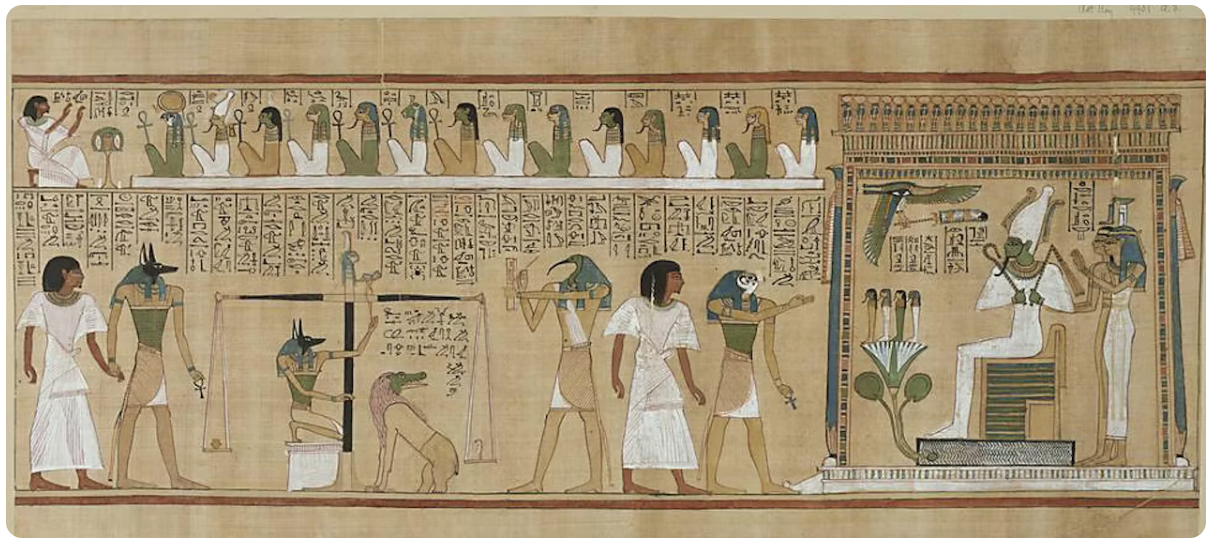
Figure 38. A partially mummified (and green-skinned) Osiris presides over the rituals of the afterlife. Bearing his atef crown, as well as his customary crook and flail, this depiction of Osiris features all of his traditional elements. The Book of the Dead of Hunefer (Hw-nfr), Sheet 3. (The Trustees of the British Museum).
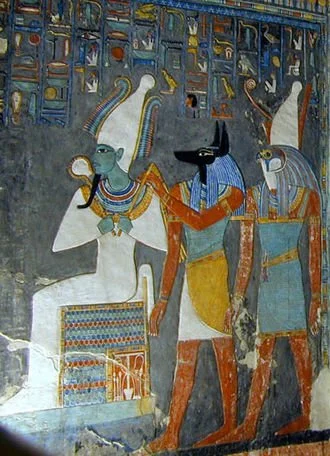
Figure 39. The gods Osiris, Anubis, and Horus. Wall painting in the tomb of Horemheb (KV57).
The Osiris Myth and Agricultural Cycles
Osiris is intimately linked with Egypt's Nile River and its farming cycles. His death and resurrection represent the yearly flooding and receding of the Nile, which revitalized the land. This myth exemplifies how Egyptians saw the farming cycle as mirroring Osiris's seasonal death and rebirth. The land's fertility was closely tied to rituals honoring Osiris, emphasizing his importance in both the afterlife and agricultural prosperity as celebrated during the Osirian Festival (Grajetzki, 2022; Fahim, 2020).
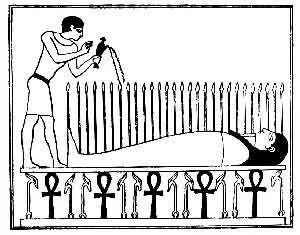
Figure 40. Osiris-Nepra, with wheat growing from his body. From a bas-relief at Philae. The sprouting wheat implied resurrection. ("EGYPTIAN IDEAS OF THE FUTURE LIFE.", E. A Wallis Budge)
How does Isis fill her time?
Specific Spells in the Pyramid Texts
Aset appears over 80 times in these early inscriptions. Key spells (called "Utterances") include:
Utterance 217: One of the earliest lists of the Ennead (the nine primary gods). It commands Osiris and Aset to "hurry" and announce to the gods of the North that the king has arrived as an "Imperishable Spirit".
Utterance 219: Explicitly addresses her relationship to Osiris, stating: "Aset, this your brother is here, Osiris, whom you have preserved alive... He lives!".
Utterance 222: Describes Aset praising the king and identifies her as a source of protection, stating that "fortunate is he whom Isis praises".
Utterance 609: Links her to the birth of the king/Horus at Chemmis, a marshy location in the Delta.
Utterance 632: A famously dramatic passage describing how she finds her murdered husband. It states: "Thy sister comes to thee, rejoicing for love of thee... she has found you".
According to Geraldine Pinch (2004: 150), the passages about Isis portray her as a central figure characterised by "unselfish love," whose role and importance evolved considerably over time.
The Delta Region: Her Ancient Home

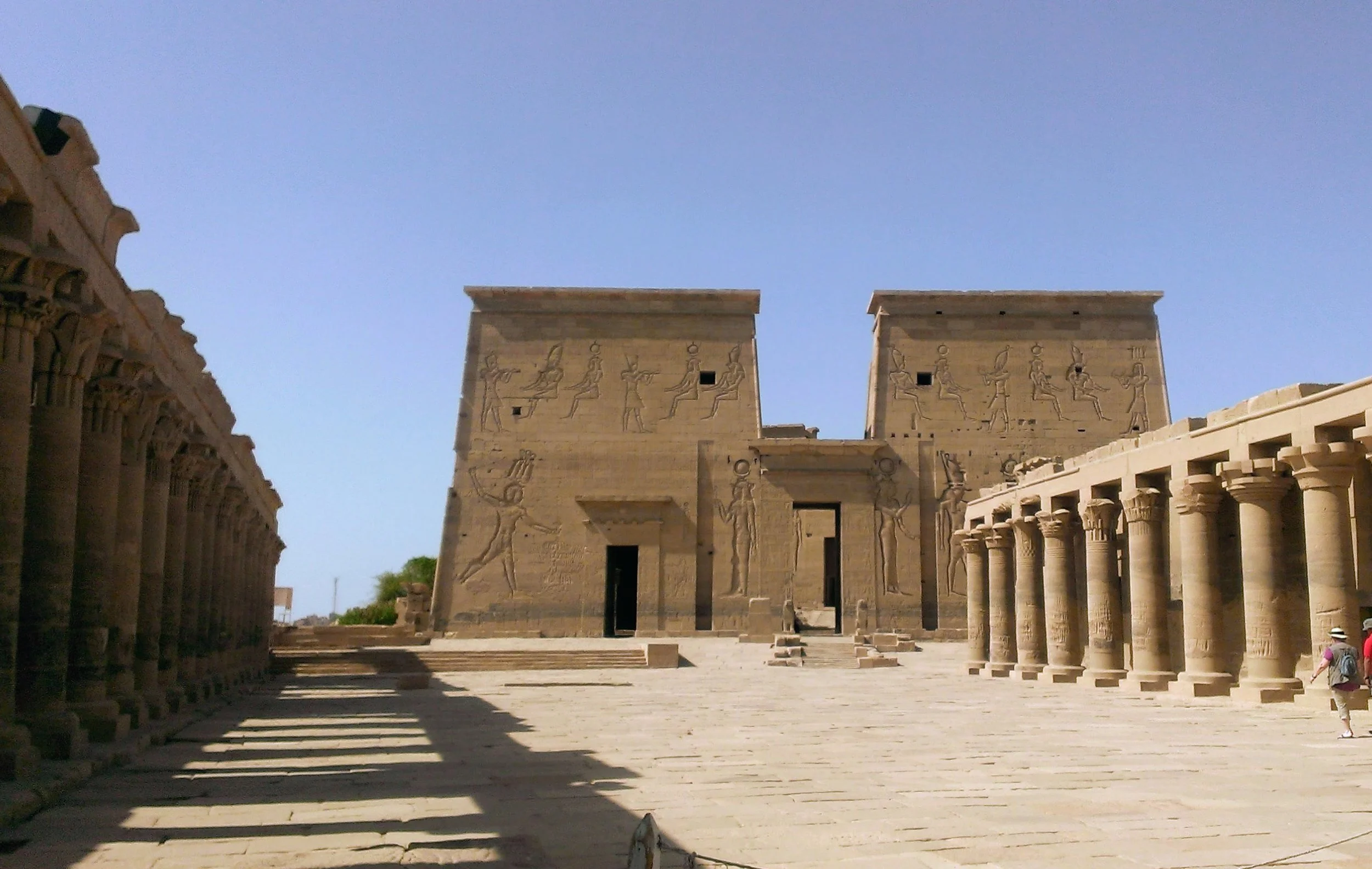
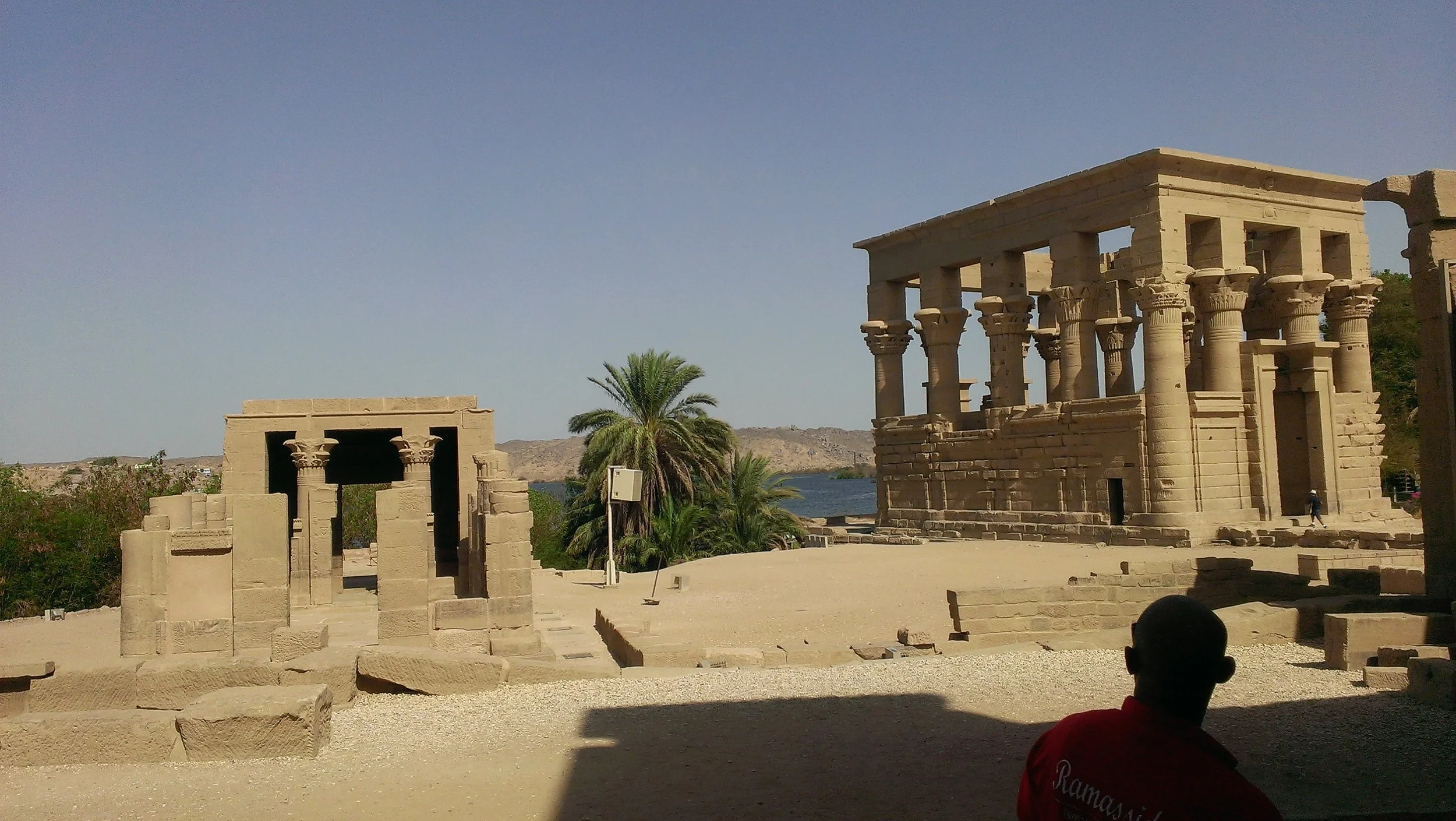
Her most famous temple is at Philae in the far south of Egypt, but her origins and earliest worship centers are actually in the Nile Delta region of Lower Egypt. One of the main sites dedicated to her in this area is Behbeit el-Hagar, also known as the Ancient Iseum. This location is situated in the 12th nome of Lower Egypt and is considered her primary sanctuary in the Delta. The site once housed a large temple constructed entirely of granite, a rare and expensive material. The choice of such a durable and costly stone showed just how important she was to the ancient Egyptians.
Another significant site associated with her is Sebennytos. Early texts and inscriptions suggest that she had a close connection to this area. In the Pyramid Texts, some of the oldest religious writings from Egypt, she and Osiris are frequently mentioned as collaborating to proclaim the king's resurrection, particularly in the Delta region. Meanwhile, in Upper Egypt, the gods Set and Nephthys are more often associated with the same role. This division reflects the regional differences in their worship and mythological stories.
Her connection to water also ties back to her Delta roots. It’s believed that her origins in this fertile, flood-prone region influenced her later role as the Mistress of the Inundation, a title that underscores her association with the Nile's annual flooding. Ancient Egyptians thought that the Nile’s floodwaters were caused by the tears of the goddess Aset, who wept for her murdered brother Osiris. This story shows her deep connections to water, fertility, and the Nile's life-giving aspects.
When she had to leave Horus temporarily, various goddesses, such as Hathor, stepped in to care for and protect the child. Many magical texts also describe her mourning her child's poisoning, often caused by a serpent bite, emphasizing her deep maternal concern and her involvement in healing magic. (Pinch 2004). As an advisor and strategist, she guided Horus through dangerous situations. For example, when Set made sexual advances towards Horus, Isis advised her son to demand part of Set’s magical strength in exchange, a tactic to weaken their foe. She also instructed Horus to catch Set's semen in his fingers rather than letting himself be contaminated, thereby protecting himself and gathering evidence. Another clever plan involved spreading Horus's semen on lettuce in Set's garden; after Set ate it, he unwittingly became pregnant with Horus's divine power, which appeared as a radiant disk symbolising Horus’s rightful inheritance. (Pinch 2004: 82).
As a healer and creator, Isis demonstrated her divine skills by restoring Horus’s severed hand after Set’s interference. In a significant ritual, she used her own hand to help Horus produce semen, acting as the divine 'Hand Goddess'—a role traditionally associated with assisting in the creation of life. This act underscored her status as a goddess of life and renewal. (Pinch 2004).
The myth involving the removal of Horus’s eyes (Pinch 2004: 82) reveals a dark aspect of her story. In some versions, Horus, enraged over Isis’s mercy toward Set, viciously mutilates her by cutting off her head. Set then punishes Horus for this act by ripping out his eyes and burying them on a mountainside, where they supposedly grew into lotuses. Following this violent event, the healing powers of other gods come into play: Thoth heals Isis by replacing her severed head with that of a cow. Some traditions attribute the restoration of Horus's eyes to Hathor or Isis herself, with Thoth also playing a healing role.
Isis also played a key part in the ongoing divine conflicts described in Egyptian mythology. During the battles between Horus and Seth, she intervened by using magical weapons, such as a harpoon, against Set. Despite her efforts, she ultimately chose to spare Set when he pleaded for mercy, recognizing their kinship ties. These stories highlight her as both a strategic thinker and a compassionate protector.
Learning Re's True Name
The myth starts with Re, the sun god known for his great wisdom and strength. As he grows older, he begins to feel his power diminish and goes a bit senile, which worries the other gods. To protect Re, they decide to monitor him. Isis, admired for her intelligence and magical skills, is curious to learn Re’s true name, because knowing a god's real name can give someone control over him. Isis crafts a plan. She creates a poisonous snake that bites Re while he's resting. The bite causes Re intense pain, and as he cries out, he calls on the other gods to help him. But despite their efforts, they can’t heal his wound. That’s when Isis comes forward, pretending to care about Re’s well-being, and offers to assist him. As part of her plan, Isis speaks with Re and gently persuades him to share his true name, which would give her full strength to ensure his survival. She does, whether or not she truly needed his name. Once Isis knows Re's real name, she gains power over him, illustrating how knowledge can be the greatest source of power.
This myth underscores the importance of knowledge, particularly understanding names in ancient Egyptian religion, and highlights Isis's power to influence events. Re's trust in Isis shows vulnerability among gods. By gaining Re's true name, Isis boosts her authority, reinforcing her role as Horus's protector and presenting her as a healer, mother, and goddess.
Multiple Mythological Roles
Apart from Osiris, Isis is a central figure in mythology whose roles evolved from a devoted protector of her family into a universal "All-Goddess" worshipped across the Mediterranean.
Cultural and Universal Importance
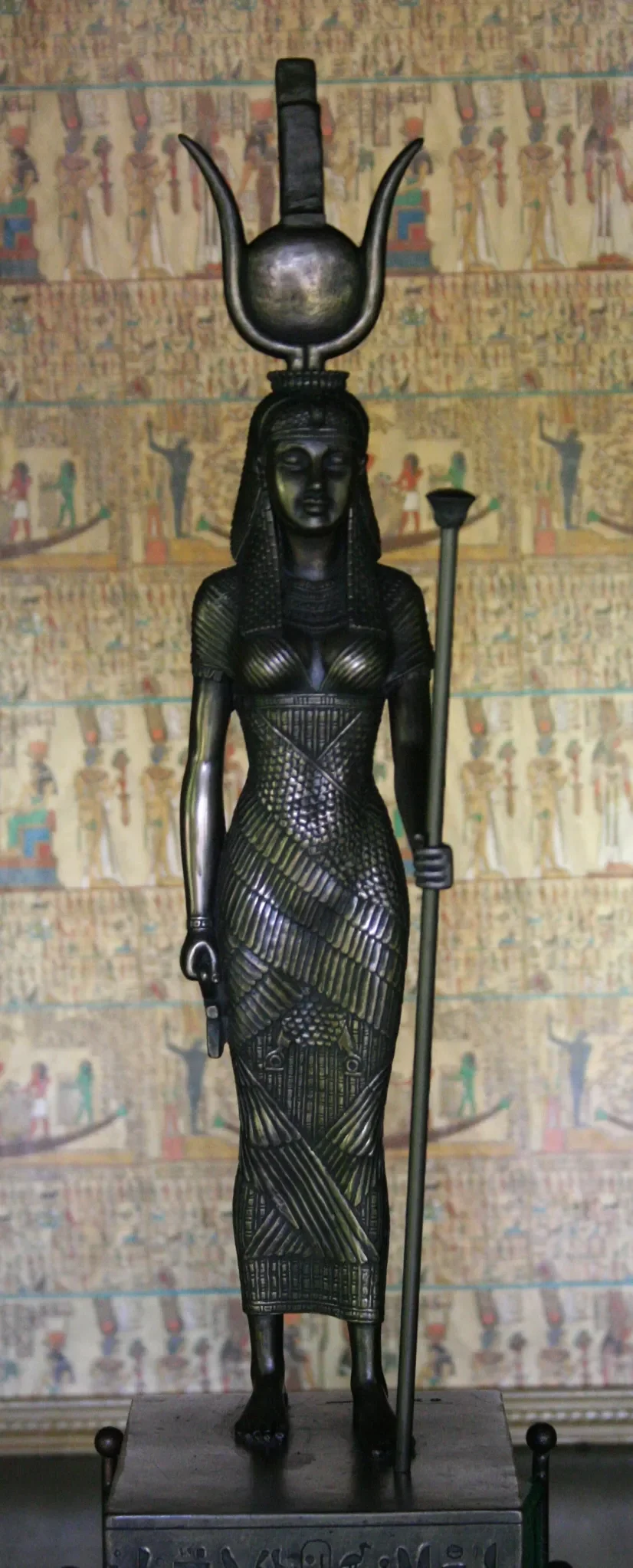
Figure 43. Isis, the Myriad-Named One (https://isiopolis.com)
In later periods, she was known as Myrionymos, meaning 'Myriad-Named,' or Iset em Renus Nebu, meaning 'Isis in All Her Names.' These titles reflected her nature as an all-encompassing goddess who embodied many aspects of other deities, including Aphrodite, Hera, Athena, Artemis, and Astarte. She was revered as the ruler of both nature and fate, celebrated as the "Lady of the Mouths and Rivers," and believed to control the annual flooding of the Nile and to summon winds, thunder, and lightning. Isis was also regarded as the source of law and civilisation; she was credited with discovering the principles of wet and dry, establishing religious laws—specifically, the fifteen commandments (thesmoi)—and promoting gender equality by empowering women to stand equal to men. Her greatest power lay in her mastery of magic, which enabled her to protect her husband Osiris, strengthen her son Horus, and command spirits as her loyal subjects.
How were they shown in art?
The earliest known depictions of Osiris date to around 2300 BCE during Egypt's Old Kingdom. Initially, Osiris was portrayed as a local deity associated with fertility and agriculture. His earliest symbols—the crook, like a shepherd’s staff, and the flail, a farming implement—are believed to have come from a predynastic ruler or shepherd-god named Andjety. By the end of the 5th Dynasty, he was commonly shown as a mummified figure with crossed arms over his chest, symbolizing his role in resurrection and linking him to rebirth and the afterlife.
During the New Kingdom (approximately 1539–1075 BCE), Osiris’s iconic image was firmly established and became standard in tombs and temples. Artists often depicted him with blue skin, representing his being dead, green skin, symbolizing new plant growth and renewal, or black, representing the Nile's fertile silt. His distinctive headpiece, the Atef crown—tall, white, conical (the crown of Upper Egypt), and flanked by two ostrich feathers—became a symbol of his divine authority, embodying truth and divine power.
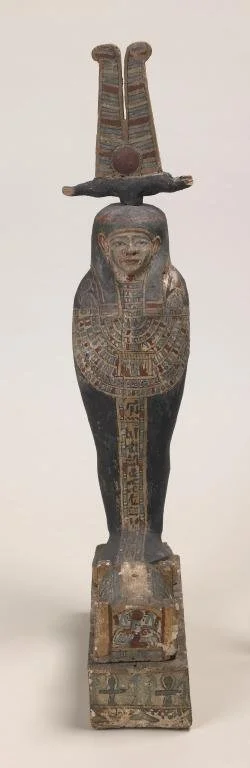
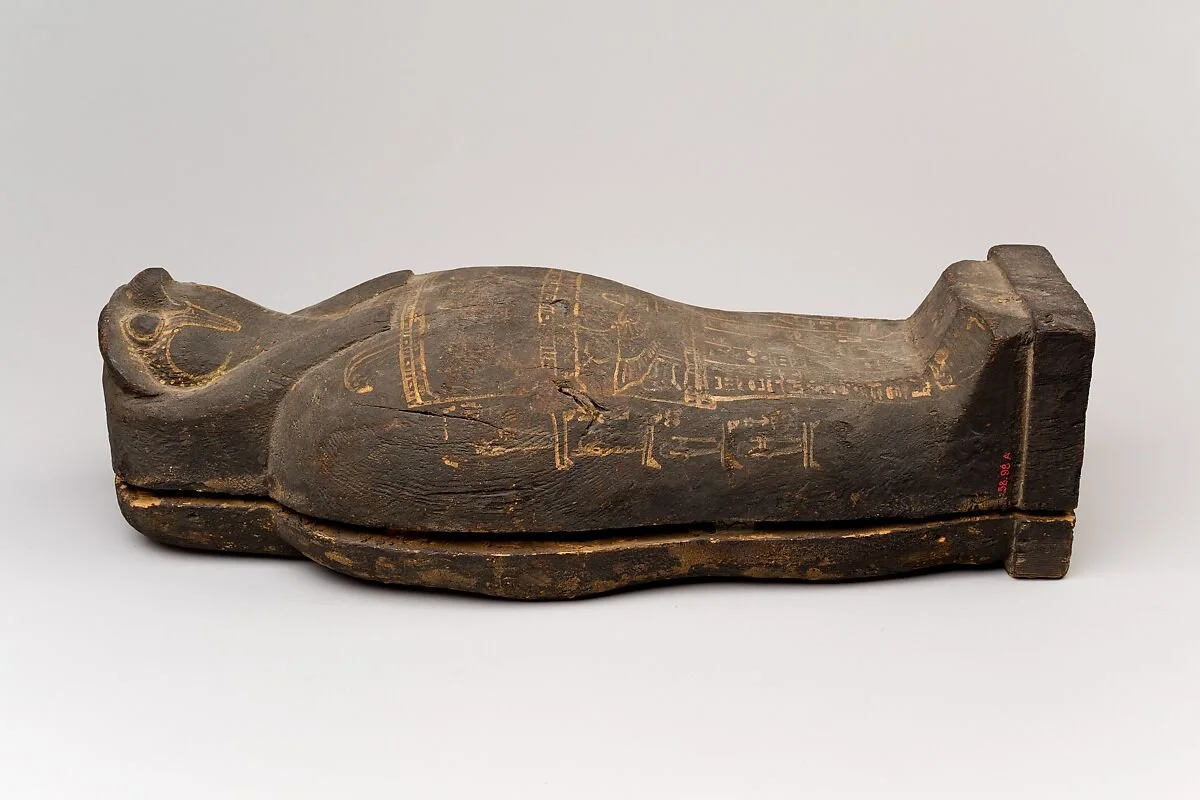
In later periods, as Osiris was incorporated with other gods, his image evolved to reflect his broader powers. During the New Kingdom and the late and Ptolemaic periods, he was fused with gods like Ptah and Sokar, depicted as a small figurine, as either a standing mummy with a prominent plume crown, or as a falcon- or hawk-headed figure, symbolising the creator, the god of burial, and rebirth. Images would show the mummy holding the regal tools, a Was-sceptre, a flail, and a crook, likely the connection to Osiris, along with the Atef crown in other artistic renderings. Ptah-Sokar-Osiris usually stands on a funerary mound, possibly the primaeval mound, and, as a full human, wears a sun disc, cow horns, and regal cobras in similar flanking positions as the ostrich feathers in the Atef crown. He is also depicted as a pygmy with a scarab beetle on his head, symbolising Kheper. These representations of Ptah-Sokar-Osiris could have inspired the deity Ptah-Patek that Herodotus called Pataikos.
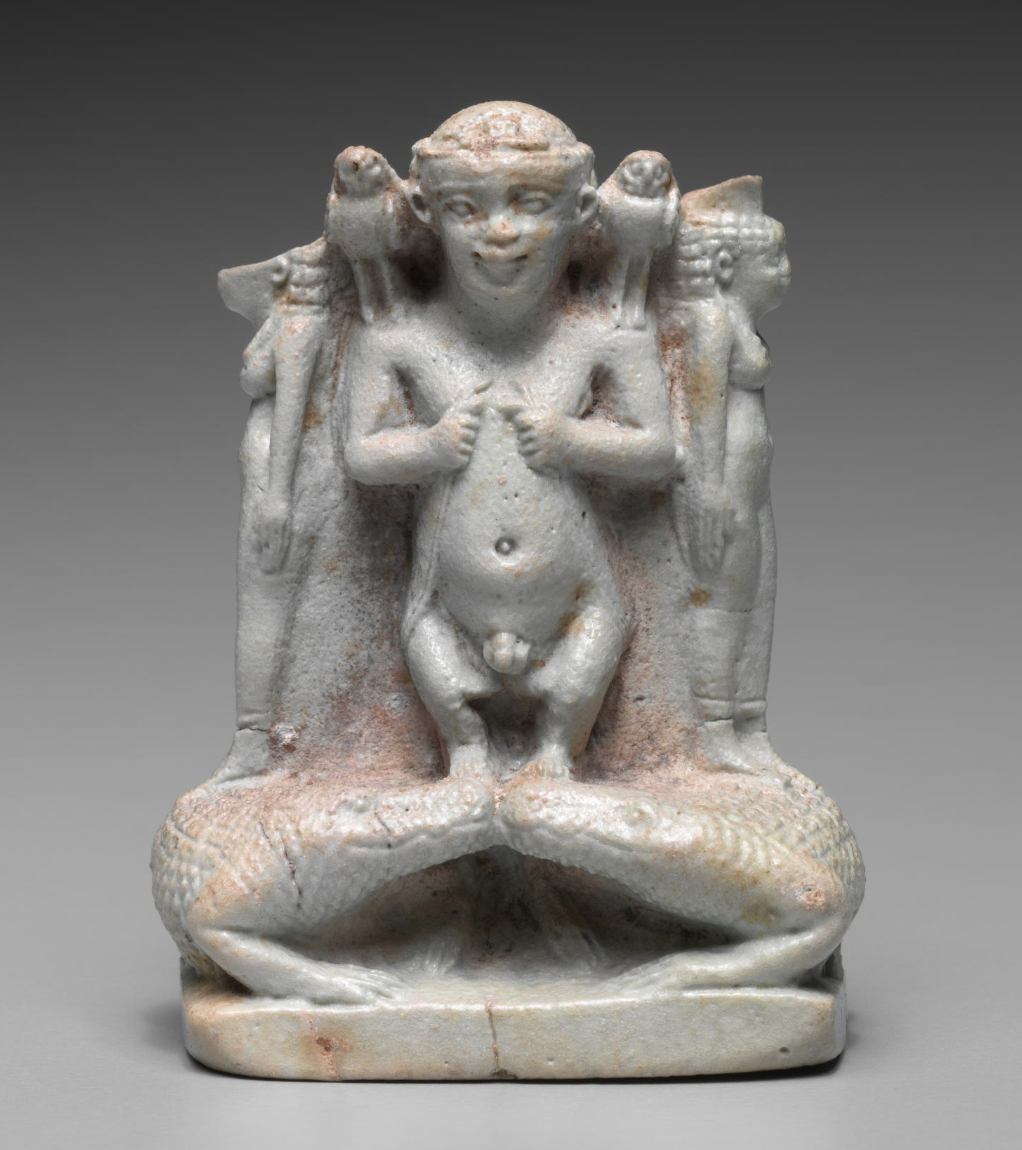
Figure 43. Figure group of Pataikos on crocodiles Late Period, 664 BCE – 332 BCE (front view) faience (National Gallery of Victoria, Melbourne)
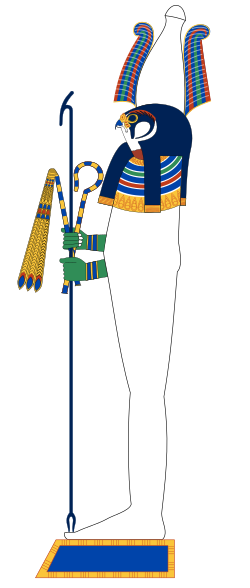
Osiris was also linked to the moon, representing its cyclical phases, with iconography featuring a lunar disk and a crescent crown, symbolizing death and resurrection cycles.
The Judgment Scene in the Book of the Dead
In ancient Egyptian funerary texts like the Book of the Dead, Osiris is central to the soul's journey. The imagery associated with Osiris is highly standardized and symbolic. The scene typically shows Osiris seated on a throne in the Hall of Two Truths. He appears mummified, with green or black skin, and holds symbols of kingship—the crook and flail. Nearby, the heart of the deceased is weighed against the feather of Ma’at, the goddess of truth and justice. While Anubis oversees the weighing of the scales, Osiris is the ultimate judge of the soul's fate. Above or around him, four small figures called the Four Sons of Horus stand on a lotus flower, representing the protection of the internal organs. A creature called Ammit, part lion, hippo, and crocodile, waits close to the scale. If the heart is heavier than the feather, Ammit devours it, condemning the soul. If the heart is lighter or equal in weight, Thoth records the positive result, and the soul moves on to Osiris for judgment (Figure 38).
Osiris in the Duat Journey - Great Pyramid
In Egyptian mythology, the Great Pyramid at Giza is associated with the merger of Ra (the sun god) and Osiris (the god of the dead), a vital cosmic event that occurs nightly in the underworld (Duat) to ensure the continuation of the universe. This union is primarily understood through the following concepts:
The Connection Between the "United Ba" and Regeneration
The merging of Ra and Osiris represents a vital process of spiritual rejuvenation, in which Ra, the sun god, is symbolically revitalised by Osiris, the god of rebirth and renewal. This process is essential for the sun to gather the energy necessary to rise each morning, symbolising a cycle of continual vitality. It reflects the natural rhythm of life, where death and rebirth are interconnected stages of an ongoing renewal process. As the sun sets, it begins to replenish itself during the night, only to emerge stronger and renewed at dawn, emphasizing the eternal nature of this cycle.
The Concept of the United Soul
Deep within the underworld, Ra and Osiris unite to form a single, unified entity known as the "United Ba" or "Twin Souls." This union is more than mere symbolism; it signifies a profound spiritual merging where Ra, the solar deity, rests within Osiris, the ruler of the afterlife, and vice versa. This blending of their essences illustrates the interconnectedness of life and death, showing that they are parts of a continuous spiritual cycle. The union embodies the idea that life endures death and that rebirth is always possible through this divine connection, thereby reinforcing the concept of eternal life.
Symbols of Life and Death
Ra and Osiris symbolize two fundamental but contrasting principles: Ra represents the energy that drives the sun towards its setting and signifies the journey toward death, while Osiris embodies rebirth, renewal, and transformation. When these two gods merge, the boundaries between life and death become blurred, suggesting that death is not an end but a necessary step toward new beginnings. This union underscores the spiritual belief that life’s natural cycle involves passing through death to achieve renewal. Additionally, it plays a crucial role in maintaining cosmic order—known as Maat—by ensuring that the sun defeats the chaos serpent Apophis each night and rises anew each morning, thereby maintaining the balance of the universe.
Representation in Royal and Artistic Symbols
The merging of Ra and Osiris also influenced the artistic depiction of ancient Egyptian kings and gods. During their lifetimes, pharaohs were associated with Ra, symbolizing their divine right to rule and their connection to the sun. After death, they were associated with Osiris, symbolising their journey into the afterlife and their hope for eternal life. This transition from solar power to divine rebirth was often depicted in tomb art and memorials. For example, in the tomb of Queen Nefertari, gods are depicted as mummified figures with ram's heads. The ram-headed sun god symbolises Ra’s regenerative power at night, resting within Osiris, thereby highlighting the dual nature of renewal and eternal life.
The Cycle of Daily Rebirth
The relationship between Ra and Osiris is an ongoing cycle that recurs daily. Each morning, as the sun rises, Ra is reborn from the underworld, renewed and ready to journey across the sky. During the night, Ra descends into the underworld, effectively 'dying' as he merges with Osiris. This spiritual death-and-rebirth process prepares him for the renewal at dawn. Sometimes, this rebirth is depicted as a scarab beetle, Khepri, which symbolises the sun’s renewal and the concept of rising anew. This continuous cycle emphasizes the eternal nature of life and death, illustrating how they are interconnected parts of a single, everlasting process.
Symbolism
Mythological Scenes and Symbolic Representations
The Osiris and Isis myths highlight stories such as Horus's conception, depicting Osiris as a phallus symbol with a bird overhead, a motif used from Seti I to the Greco-Roman Dendera. The rare act of Osiris and Isis's union, with Osiris on a funerary bed and Isis as a bird of prey, appears in only three Dynastic images. Osiris's resurrection, shown with Isis and Nephthys beneath solar boats, symbolizes the afterlife and sky worlds, depicted in Seti I's tomb and others. Scenes depicting Osiris protected by Isis and Nephthys underscored their roles through repeated imagery. The broader narrative includes Osiris's murder by Seth, Horus's birth, and their conflict, with Osiris as underworld king, Horus with a double crown, and Isis as protector, with kings offering gifts.
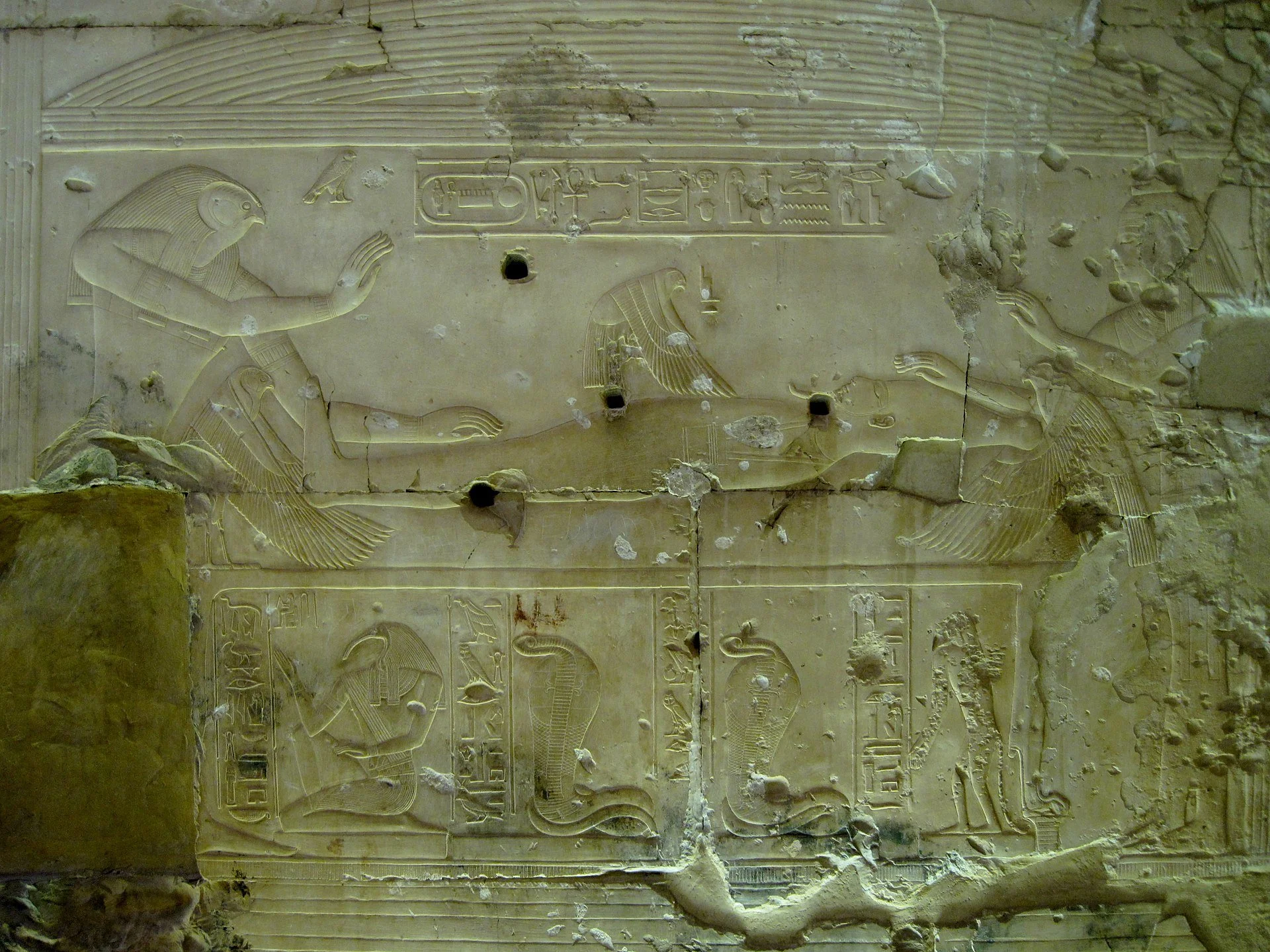
Figure 46. Isis, in the form of a bird, copulates with the deceased Osiris. At either side are Horus, although he is as yet unborn, and Isis in human form. Relief of the “raising” of the god Osiris by the goddess Isis in the mortuary temple of Seti I in Abydos, Egypt (Photo by Olaf Tausch)
Evolution of Iconographic Identification
A change in the identification of the bird above Osiris’s private part appears in ancient scenes. In Abydos, at the Ptah-Sokar chapel, it was labeled as Isis, depicted as a kite. About 1300 years later, in Dendera, its meaning shifted. Originally, the birds above Osiris—those for Isis and Horus—were called falcons. Later, the bird over Osiris’s private parts was depicted as a vulture representing Nekhbet, or as “the Falcon of Gold,” a title for Horus. This evolution indicates the bird once symbolized Isis but later also represented Nekhbet or Horus, possibly the Ba-bird of Osiris when viewed as Horus, with these meanings emerging from the Ramesside period to Greco-Roman times.
Most information comes from sites like Abydos and Dendera, which may bias understanding due to their significance and preserved artifacts. Few images show Osiris and Isis together—only three from the entire Dynastic Period—probably because such scenes were rare or did not survive. Myths were primarily transmitted through rituals rather than through images or texts.
Artistic Innovations and Symbolic Elements
Ancient Egyptian artists used symbols of gods, leading to diverse styles over time that reflected specific contexts rather than contradictions. Bronze Osiris statues gained popularity from the Twenty-Sixth Dynasty, depicting both mummy-like and youthful forms, symbolizing his connection with the moon. The Osirian Khoiak Festival evolved from the Middle Kingdom into a lively celebration, with temple carvings showing priests performing rituals—entering dark rooms and emerging onto temple roofs with gods’ statues, symbolizing unity with the sun disk. The festival conveyed a dual message: entering darkness and emerging into light. Ceremonies honoring Osiris' death and rebirth included raising a Djed pillar and making grain-filled Osiris mummies.
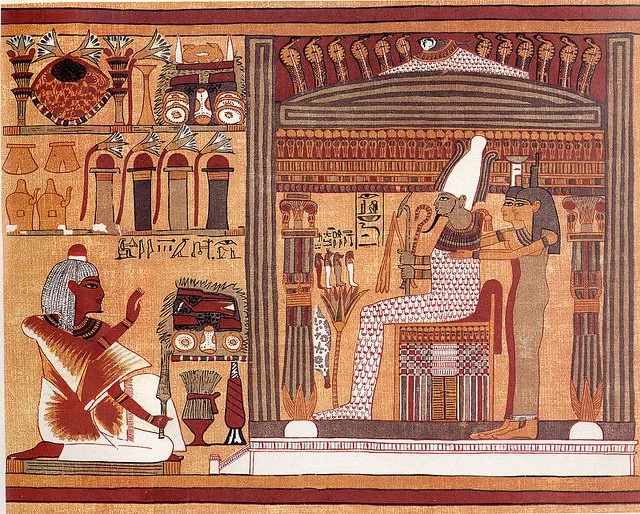
Figure 47. Ani honoring Osiris Prior to the procession and feast during the Osirian-Khoiak Festival.
Religious and Cultural Significance
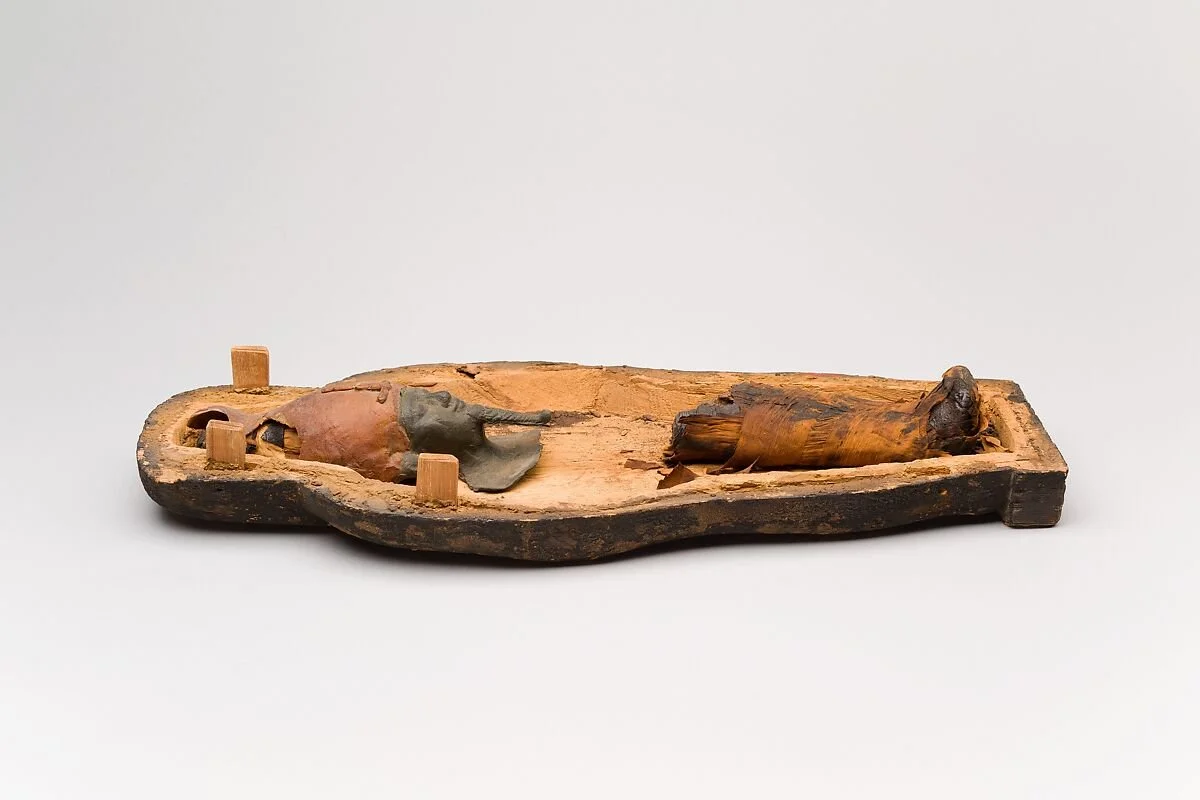
The images held deep religious meaning, focusing on resurrection and eternal life, core to Egyptian beliefs. The story of Horus born from Osiris was depicted at Abydos, vital to funerary practices, appearing in many cemeteries from the New Kingdom, highlighting their cultural importance. The myth shaped two ideas: Horus as an earthly king and Osiris’s rebirth as an Underworld ruler. Artwork showing kings like Sethos I with Horus and Osiris reinforced the divine connection of Pharaohs, using symbols like the double crown, atf crown, wAs scepter, and ankh for protection, authority, and order. Scenes of Osiris’s resurrection and solar boats symbolized the journey into the afterlife, seen in royal tombs of Ramesses VI, IX, Sheshonq III, and private graves like Mutirdis’s in Thebes, shared across society.
Scenes also depict social differences: Osiris rising or sailing in the solar barque appear in royal and some private tombs, indicating symbols became more accessible over time. Some images include hidden scripts alongside hieroglyphs, suggesting they are intended for initiated audiences.
Cultural Shifts During the Greco-Roman Period
During the Greco-Roman period, Osiris festivals and art evolved as Greek and Roman mystery religions influenced Egyptian traditions, leading to more somber and mystical themes from the Hellenistic period onward. Rituals became theatrical performances based on Osiris’s and Dionysus-Zagreus’s deaths. The festivals emphasized dualism, symbolizing a spiritual journey from darkness to light, representing the soul’s passage from the underworld to Elysium or the Egyptian Fields of Iaru. During this period, the balance between solar and lunar worship shifted, with an increased focus on the Osirian cult, particularly on moon phases. Small bronze statues depict Osiris as a young figure or wrapped in bandages, likely due to advances in metalworking and new religious ideas.
How were they synchronised?
Osiris
Local Gods
As the worship of Osiris grew in ancient Egypt, he began to incorporate the roles of older, regionally revered gods. One of these was Khenti-Amentiu, a wolf-deity associated with the city of Abydos, whose name means "Foremost of the Westerners." Osiris adopted this title, symbolizing his position as the chief god of the dead because the West is where the sun set and the enterance to the underworld or the dead. Another was Andjety, a shepherd-god from Busiris (modern-day Abusir Bana), whose symbols—such as the crook and flail—were absorbed into Osiris’s own imagery. The name, which derives from the Egyptian pr wsjr ("house of Osiris"), could be pronounced boo-SYE-riss, similar to Osiris, because of the name's meaning, or sometimes as boo-SEER-iss, based on the Arabic name for the site, Abusir. These adaptations reflected how Osiris came to represent not just resurrection but also local traditions and identities.
The Ptah-Sokar-Osiris Triad
In the city of Memphis, three gods were merged into a single, powerful figure to symbolize the entire cycle of life, death, and rebirth. These gods were Ptah, the creator god representing beginnings; Sokar, who presided over the underworld and death; and Osiris, the god of resurrection and the future. This combination was frequently depicted in funerary art, particularly in wooden statues that held scrolls, intended to help the deceased navigate the afterlife. The unification of these deities reflected the Egyptians' desire for continuity and hope beyond death.
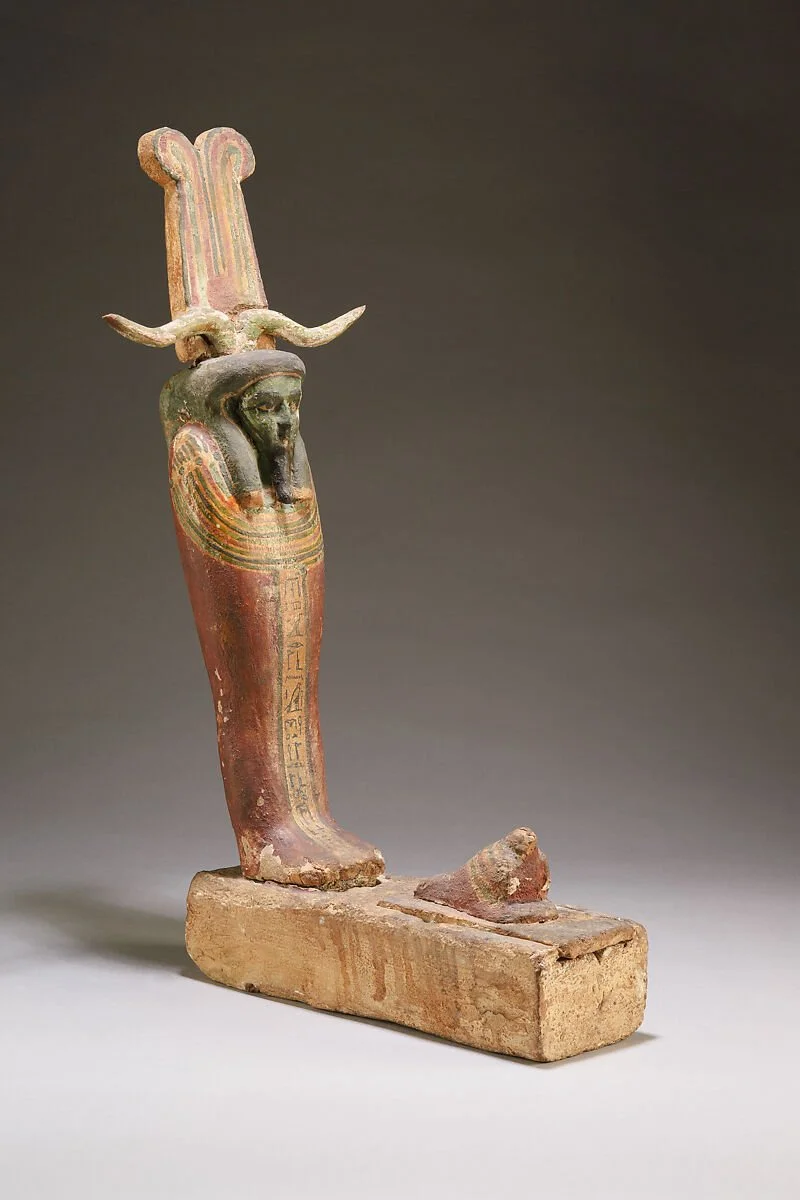
Figure 47. Ptah-Sokar-OsirisLate Period, Saite, ca. 600–525 BCE (Photo from the Met)
The Union of Solar and Underworld Forces
Egyptians also linked their sun god Re with Osiris through a process called solar synchronisation. According to their beliefs, the two gods would meet in the underworld at night and unite to form a single soul, or "United Ba." This union allowed the sun to be "recharged" by Osiris's regenerative power, enabling it to rise anew each morning, symbolising renewal and the eternal cycle of life.
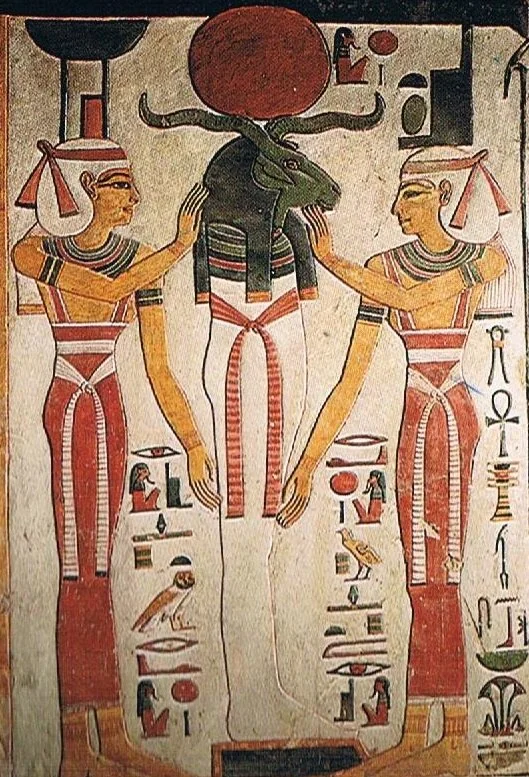
Figure 48. Union of Ra into Osiris under the protection of Nephthys and Isis (tomb of Nefertari).
Greek and Roman Influence
When Greece and Rome took control of Egypt, they introduced their own gods into the Egyptian religious system. One of the most notable examples was Serapis, created by the Ptolemaic rulers. He was a hybrid deity combining aspects of Osiris and the Egyptian bull god Apis with Greek deities such as Zeus, Hades, and Asclepius. This blending was intended to make Egyptian religion more understandable and acceptable to Greek and Roman populations.
Serapis
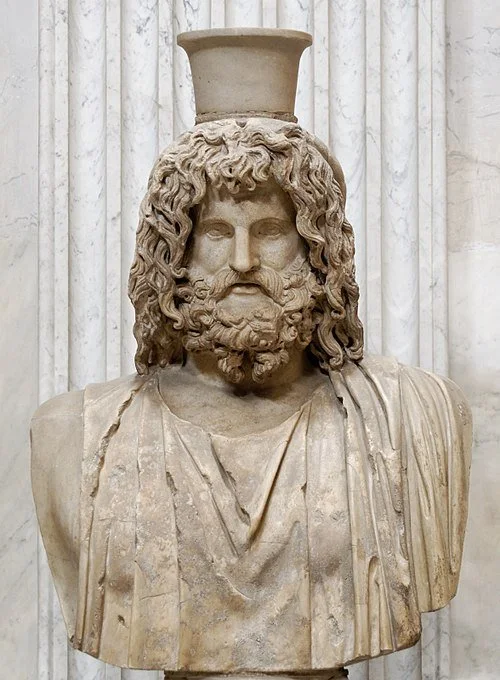
Figure 49. Bust of Serapis. Marble, Roman copy after a Greek original from the 4th century BC, stored in the Serapaeum of Alexandria.
Under Greek rule (323–30 BCE), Osiris’s image changed significantly. He was merged with the Greek Apis Bull to create Serapis and adopted a Greek artistic style. His depiction included a full beard, flowing hair, and a grain basket (modius) on his head, making him resemble Greek gods like Zeus or Hades more than his earlier Egyptian forms. Later, a merger with Dionysus emphasized his association with wine, festivities, and revelry. Art from this period depicts him with Greek symbols such as ivy and grapes, blended with subtle elements of Egyptian royal iconography, thereby merging the traditions of both cultures.
To understand the relationship between different ancient Egyptian religious practices, it helps to compare the cult of Serapis and the Book of the Dead. These traditions represent different approaches to the afterlife: one was designed for public and temple use in the Greco-Roman world, while the other served as a private guide for individual souls on their journey after death.
Symbols of the Serapis Cult
The cult of Serapis was a strategic marketing effort by the Ptolemaic rulers to unify Greek and Egyptian followers through a common deity. A central symbol of Serapis is the Modius—a basket placed on his head instead of an Egyptian crown —which represents control over Egypt’s grain and symbolises fertility and abundance. Additionally, Cerberus, the three-headed dog of Greek mythology that guards the underworld, links Serapis directly to Hades and underscores his role as ruler of the dead. Serapis was also often depicted with a large snake, the Agathodaemon, which represented good luck and served as a protective spirit for Alexandria. To appeal more to Greek audiences, Serapis was portrayed with characteristics similar to those of Zeus, including a beard, curly hair, and regal robes—moving away from the more mummy-like Egyptian imagery.
The Political Role of Serapis
Ptolemy I Soter, a Macedonian general who became the ruler of Egypt around 305 BCE, created Serapis not just as a religious figure but as a tool for political unity. His goal was to unite the diverse religious communities in Egypt—native Egyptians and Greek settlers—under a common deity. Worship of this new god fostered a sense of shared identity and stability during a period of cultural division. Serapis was a hybrid deity, depicted as a Greek king yet retaining features of Egyptian underworld deities (Murphy, 2021).
In Alexandria, worship of Serapis fostered a spiritual connection to the city and offered Egyptians comfort by linking Serapis to their well-known Osiris-Apis tradition (Dawson 2014). Temples dedicated to Serapis, such as the Serapeum in Memphis, combined Greek and Egyptian architectural styles, featuring statues of Greek philosophers alongside Egyptian sphinxes. However, not everyone accepted Serapis; many Egyptians regarded him as a fraud or a substitute for their traditional gods, whereas Greeks regarded him as a symbol of Ptolemaic power (Murphy, 2021). Ultimately, Serapis’s main role was successful, as he was less about inspiring devotion and more about maintaining social stability during a period of division.
Identifications with Greek Gods
Herodotus, the Greek historian, noted that Osiris was essentially the Greek god Dionysus, both gods of fertility, wine, and rebirth who suffered death and dismemberment before being revived. Similarly, the Romans associated Osiris with Pluto or Hades because of his role as the ruler of the underworld. These identifications helped the Greeks and Romans understand Osiris’s functions within their own religious frameworks, creating a bridge between Egyptian and Western mythologies.
Isis/Aset
In Greek and Roman times, Isis was portrayed as a universal goddess, having absorbed traits from many other deities. She was often called Isis Myrionymos, meaning ‘myriad-names’ or ‘the Goddess of Ten Thousand Names,’ highlighting her widespread worship across cultures. By the height of the Roman Empire, Isis was seen as a divine figure embodying all gods and goddesses, a concept that made her a symbol of universal motherhood and divine power.
Predecessors in Egyptian Religion
Before she was widely worshipped outside Egypt, Aset had already adopted traits from earlier Egyptian goddesses. She took over Hathor’s symbols of motherhood and her headdress of cow horns, emphasising her maternal role. She also incorporated aspects of Sopdet (Sothis), representing the star Sirius, whose rising signalled the annual Nile flood, linking her to cycles of nature and fertility.
Major Greek and Roman Goddesses
Followers believed that she embodied all the powers traditionally associated with feminine divinity—such as nurturing, caring, and creating life. In this way, Isis became a symbol of divine femininity and universal protection throughout the ancient world.
Isis’s connection with Greek goddesses was strong. She was frequently associated with Demeter, the goddess of agriculture and harvest, reflecting themes of fertility and rebirth similar to those of Persephone, her mythological counterpart. She was also linked to Aphrodite, the goddess of love, beauty, and marriage, sometimes depicted in the nude or in elegant Roman-style attire. Additionally, Isis was compared to Persephone because of her role in death and resurrection, and she also took on qualities of Hera, the queen of the gods, and Artemis, the moon goddess and protector of animals.
The Romans associated Isis with their own deities, such as Venus, goddess of love, and Fortuna, goddess of luck and fate. As Isis-Venus, she represented love and beauty, while as Isis-Fortuna (or Isis-Tyche), she symbolised good fortune and destiny, often depicted with symbols like a rudder and a cornucopia. She was also associated with Ceres, the goddess of grain and sustenance, mirroring her Egyptian origins.
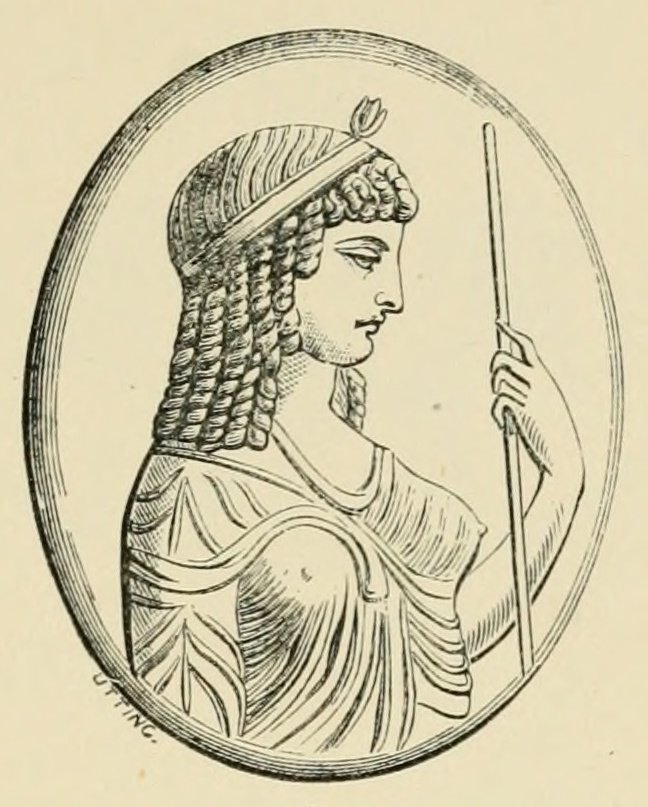
Figure 50. Isis, crowned with the lotus and bearing the sceptre. An intaglio, of Ptolemaic date, in sardonyx.
Other Regional Goddesses
In regions like the Levant, Isis was identified with Astarte, a goddess of war and fertility. In Rome, her cult sometimes overlapped with that of Cybele, the "Great Mother" of Phrygia, illustrating how her worship spread and intersected with diverse cultural traditions.
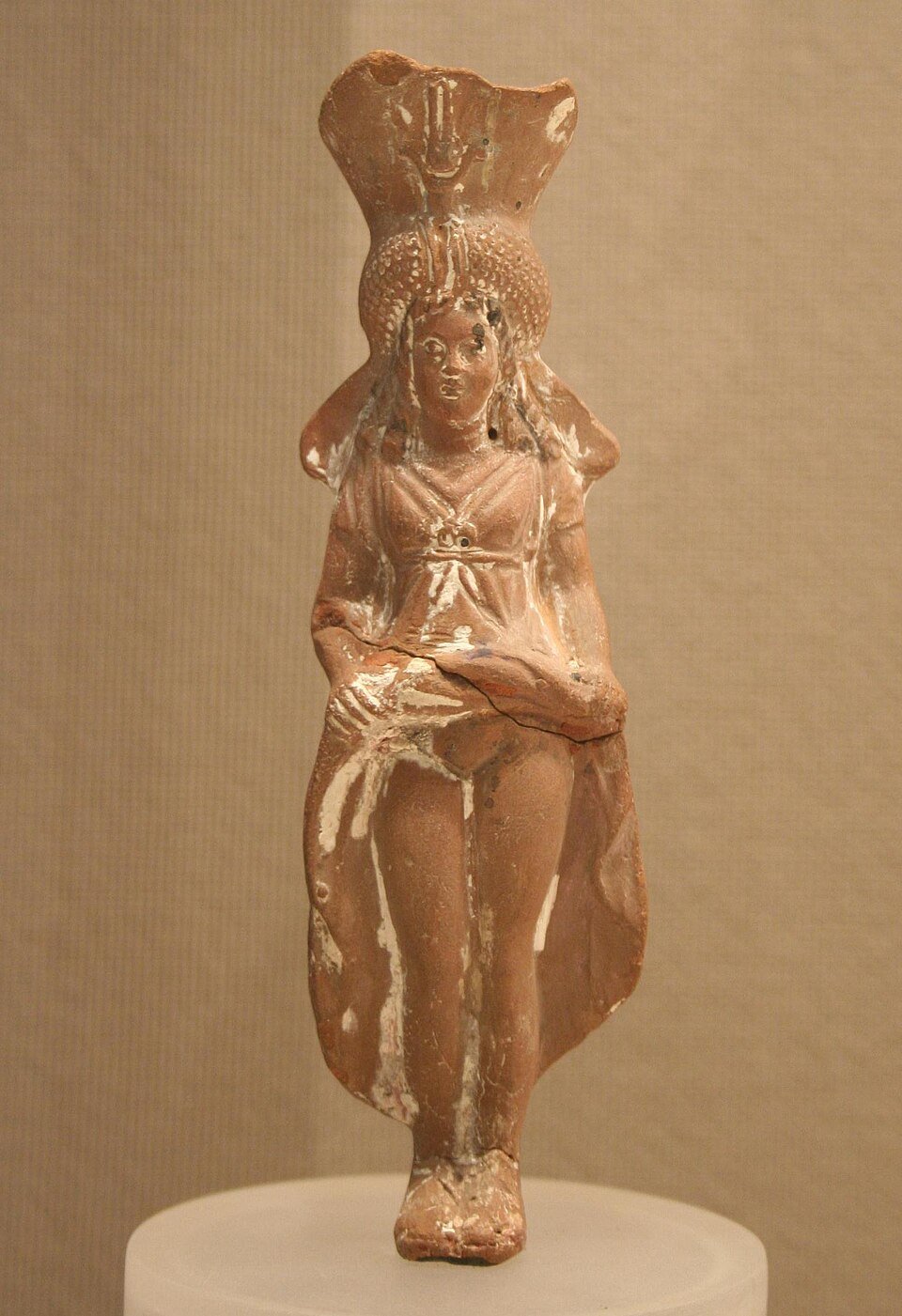
Figure 51. Figurine possibly of Isis-Aphrodite, unknown provence, first or second century BCE (Ägyptisches Museum Leipzig).
More Recent Depictions
The Visual Template
For many centuries, the Mediterranean region was filled with statues depicting Isis Lactans holding and nursing the infant Horus, also known as Harpocrates. When early Christians began to portray the Virgin Mary, they had no established visual tradition of their own. To communicate their new faith, they naturally adopted existing artistic symbols—specifically, the pose of a seated mother with a child on her lap—to symbolize Mary and Jesus.
This pose, where the mother supports her breast or the child’s head, was directly taken from images of Isis. Isis was often shown sitting on a throne, an image that early Christian art adapted for Mary, who was frequently depicted as the Sedes Sapientiae or "Throne of Wisdom." In this role, Mary literally served as the seat for the Christ child, reinforcing her importance and her connection to divine authority. The shift from Isis Lactans to the Christian Madonna is one of the best-known examples of how religious imagery can evolve while maintaining its core symbolism. As the Roman Empire converted to Christianity, familiar images of the divine mother were adapted to fit the new religious context.
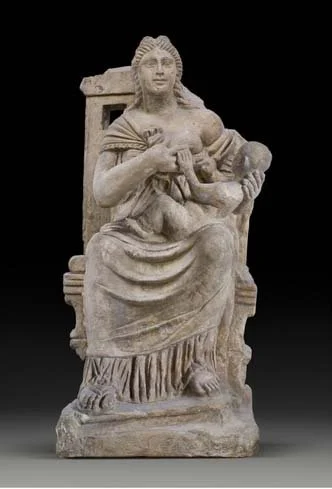
Figure 52. Isis holds her breast with her right hand, while Horus lies across her left knee. Limestone statuette of Isis lactans from Antinoe (fourth century CE); Dahlem Museum, Berlin (Tran Tam Tinh, 1973: fig. 17).
Overlapping Titles and Symbols
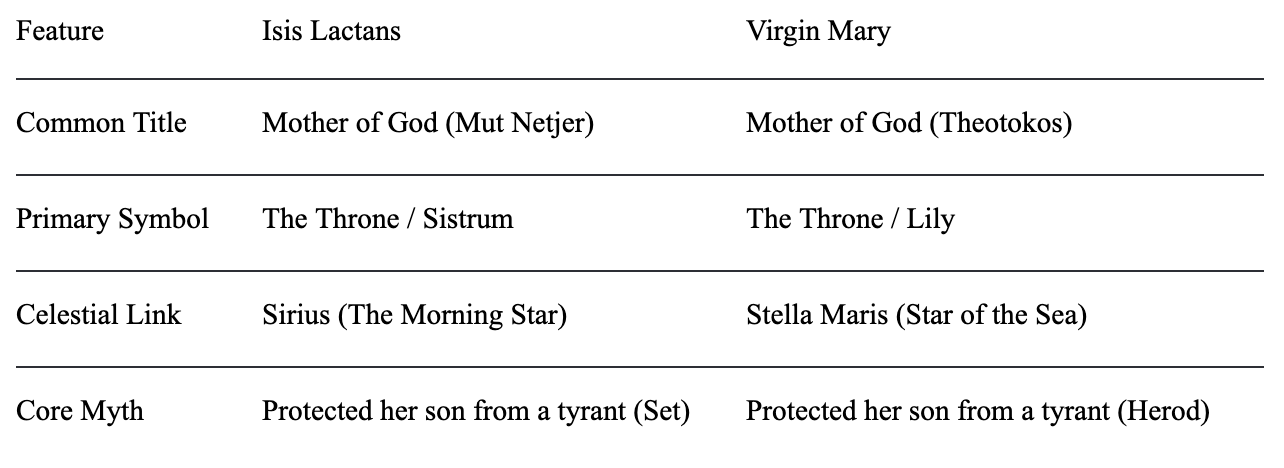
As the worship of Isis declined and Christianity grew, many of the goddess's most meaningful titles and symbols were transferred to Mary to make her more relatable to new followers. The title Stella Maris, meaning "Star of the Sea," was associated with Isis, who was seen as a protector of sailors. This title was later adopted for Mary, emphasizing her spiritual guidance over those at sea.
Another shared title was Queen of Heaven, where both Isis and Mary were celebrated as the highest female figures overseeing the universe. Additionally, in later Christian imagery, Mary was often depicted standing on a crescent moon—a symbol closely tied to Isis in her Greco-Roman lunar form. These shared titles and symbols helped bridge the gap between the ancient goddess and the Christian Mother figure.
Geographical Continuity in Egypt
The connection between Isis and Mary is particularly evident in Egypt. In Coptic Christian communities, early Christian figurines of a nursing mother closely resembled representations of Isis nursing Horus. Artifacts found in the Coptic Museum in Cairo show a gradual shift where traditional Egyptian symbols, like the sun disk often associated with Isis, were replaced by Christian symbols such as the halo.
Transforming Sacred Spaces
The influence of Isis extended beyond art into physical spaces of worship. The Temple of Philae, one of the last places of worship dedicated to Isis, was converted into a Christian church dedicated to the Virgin Mary in the sixth century. This transformation was viewed as the fulfilment of replacing the "Old Mother" Isis with the "New Mother," Mary, symbolizing the continuity and adaptation of religious traditions over time.
More Recent and Modern-Day Interpretations
The Novel Dune by Frank Herbert
The User, Sad_Watercress_7930 (2025), addressed a question on Reddit: “Why does Herbert call Isis a 'demon-goddess’? He specifically links it to the language they were speaking, which is close to Middle Egyptian. Isis was never a demon.” The user does the research, finding that the ancient Greek term δαίμων (daimōn) means a spirit or divine entity, likely deriving from the Greek verb daiesthai, meaning 'to divide' or 'distribute' (which I have been able to cooberate). As mentioned before, Isis is first documented in the 5th Dynasty (2494–2345 BCE). So it’s possible that, in addition to reviving Osiris and creating Horus to restore balance, she may have had an earlier role related to 'distribution'—perhaps of intangible elements like magic, life, or luck. Her hieroglyphic name 𓊨𓏏𓆇𓁐, which features the throne symbol, could imply that 'division or distribution' represents authority. Although this remains speculative, some ancient cults might have regarded her as a 'demon-goddess' before Christianity associated 'demon' with negative connotations. The user speculated that Herbert probably saw her in this way unconsciously, but given the limited records from over four thousand years ago, this remains open to interpretation.
The term “demon” is used here to evoke Isis’s original role in helping people transition to the afterlife—similar to how Osiris’s story depicts the resurrection or restoration of the body. However, since this is set thousands of years in the future, the understanding of past beliefs has changed. Calling her a “demon-goddess” might not fit with the current way we see the Isis myth. Still, the author makes it clear that in the Dune universe, there is a Cult of Isis whose followers have included demonic elements, probably related to her traditional role in guiding souls to the afterlife.
ISIS (Islamic State of Iraq and Syria)
Addressing the elephant in the room… Starting in 1999 and active until the present. The group's name has evolved alongside its territorial claims, often leading to confusion regarding its various acronyms. ISIS and ISIL stand for the "Islamic State of Iraq and Syria" and the "Islamic State of Iraq and the Levant," respectively, with the key difference stemming from the translation of the Arabic term al-Sham, which can refer either to Syria specifically or to the broader Levant region (Hassan 2014, 2015, Bradley 2015). In June 2014, the group shortened its name to "The Islamic State" to assert its claim of authority over all Muslims worldwide. So, really, it has ABSOLUTELY NOTHING to do with Isis.
[Meanwhile, the Arabic acronym Dāʿish, pronounced similarly to the English name Daesh, is disliked by the group and used by detractors because it sounds like Arabic words meaning "to trample" or "one who sows discord." In areas controlled by IS, the use of the name Daesh was often met with punishment, such as flogging.]
Stargate SG-1
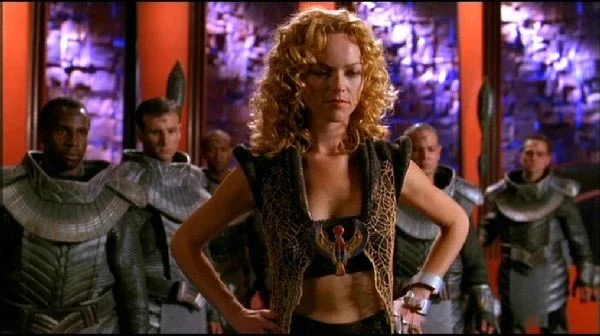
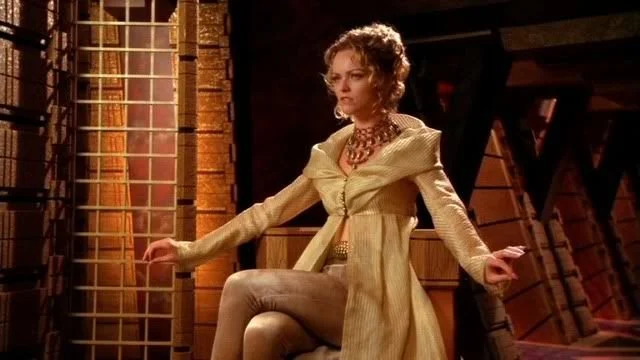
Episode 14 of season 4, The Curse, is when we are introduced to both of the symbiotes, the dead husk of Isis and Osiris, who takes control of the love interest and ex-girlfriend of Dr Daniel Jackson, Dr Sarah Gardner, played by Anna-Louise Plowman. According to the Stargate Wiki, the context of the Stargate SG-1 television series, Osiris and Isis were a pair of Goa'uld king and queen whose history is tied to ancient Egyptian mythology and a failed archaeological expedition.
Ancient History and Imprisonment
Osiris rose to power as a System Lord during the Second Goa'uld Dynasty and was recognized as Egypt's first Pharaoh, alongside his consort, Isis. In Egyptian mythology, they were once trapped in stasis chambers—canopic jars—by the Goa'uld Seth. Around 9000 BCE, Seth betrayed them during a rebellion against the supreme System Lord, Ra. As punishment, Ra removed them from their hosts and sealed their symbiotes in canopic jars designed for eternal stasis. These jars remained hidden until 1931, when the Stewart expedition discovered them. Unfortunately, the expedition's ship sank before they could retrieve or analyze the artifacts.
Modern Discovery and Fate
In 2000, when the artifacts were finally recovered and transported, it was discovered that the seal on the Isis jar had been broken during transport from its original shipwreck. This breach of the seal caused the symbiote to lose its preserved state, leading to its death. An autopsy was subsequently carried out on her remains at Stargate Command by Dr Janet Fraiser.
Although Isis did not survive, her companion Osiris remained alive because his jar was still properly sealed. Later that year, archaeologist Dr Sarah Gardner unintentionally opened the Osiris jar while examining artefacts from the shipwreck site. This accidental break allowed the symbiote to transfer itself and select her as a new host. To conceal the change, they dressed in garments originally intended for Isis, thereby aligning with the new host's female appearance.
Return (2000–2003)
The other episodes in which Osiris appears and plays a major role are in season 5 episodes 15 “Summit” and 16 “Last Stand”, season 5, episode 22 "Revelations", and then skipping forward to season 7 episode 15 “Chimera”.
After killing her mentor and nearly fatally injuring Daniel Jackson, Osiris escaped from Earth on a hidden Tel'tak spacecraft. They then rose to become an Underlord under the revived Anubis, serving as his chief representative at the System Lord Summit, where she worked to secure his reinstatement, which ended up working especially after Daniel snuck abroad and the System Lords got attacked. Osiris took command of parts of Anubis's fleet, notably capturing the Asgard warrior Thor and employing psychological warfare tactics against SG-1.
In 2003, they returned to Earth with the aim of probing Daniel Jackson's mind to locate the fabled Lost City of the Ancients. However, SG-1 anticipated her move, set a trap, and successfully captured her. During her capture, the Osiris symbiote was extracted from Sarah Gardner; although she survived the procedure, the symbiote was either destroyed during removal or executed shortly afterwards due to the danger it posed.
Personality of Another Megalomaniac
Based on available records from the show, Osiris is depicted as a pragmatic, highly arrogant Goa'uld with a complex identity during his modern resurgence. Its approach was grounded in practicality and careful planning, setting it apart from more stubborn System Lords. For example, it acknowledged Anubis's superior strength and chose to serve as their Underlord, demonstrating a willingness to forge calculated alliances rather than stubbornly opposing stronger enemies. Moreover, Osiris was renowned for its diplomatic talents; ancient court sources often described it as a "silver-tongued" diplomat. These skills allowed it to negotiate effectively, such as securing Anubis's return to power at the System Lord Summit through tact and persuasion. Its ruthless nature was also a defining trait—it showed no remorse in sacrificing its Jaffa soldiers when necessary and was willing to use torture to extract information, as evidenced by its treatment of enemies like Daniel Jackson.
Osiris’s personality was characterized by a sense of grandeur. Like all Goa’uld, it was a megalomaniac who often claimed divinity, even when confronting advanced civilizations like the Asgard. Though it had a female host, Sarah Gardner, Osiris retained a male identity in his thoughts and self-view. To enhance his host’s image, he chose a flamboyant wardrobe, highlighting his showy nature. His arrogance often led him to underestimate opponents, including the humans of the Tau'ri—a common flaw among Goa'uld leaders.
Osiris's personal obsessions and tendencies showcased his complex personality. He was especially fixated on Daniel Jackson, motivated by their past relationship and Jackson's role in removing some of Osiris's rivals. His flamboyant, theatrical style was evident in threats and statements like his notorious promise that "the rivers of the Earth will run red with blood" if he escaped captivity. This combination of arrogance, strategic intelligence, and personal obsession made Osiris a formidable and unpredictable leader among the Goa'uld.
The Evolution of Osiris and Isis: Mythological Depictions Through Time
Historical Context and Changes in Myth
Osiris, primarily recognized as the god of the afterlife, resurrection, and fertility, and Isis, his devoted wife and mother of Horus, began to take on distinct forms and importance during different periods of ancient Egyptian history. Initial myths from the Old Kingdom primarily focused on the theme of dualities such as life and death, encapsulated in the cyclical nature of Osiris's death and resurrection. As Llonch points out, the sexual union between Osiris and Isis, which symbolized the conception of the pharoah, through Horus, embodies the foundational aspects of kingship and regeneration in ancient Egypt (Llonch, 2020).
As the Middle Kingdom emerged, the complexity of their narrative increased, including themes of suffering, sacrifice, and the pursuit of divine justice through mythological adaptations. This complexity is echoed in the detailed representations of their stories found in Coffin Texts, which expanded significantly upon the earlier Pyramid Texts, symbolizing growing conceptual richness regarding the afterlife and the deified state of kings (El-Aziz, 2022). Hence, during the Middle Kingdom, there was a marked increase in the attention given to Osiris and Isis, where their roles transitioned from royal archetypes to central figures in the popular religion practiced by the masses.
Art and Representational Shifts
Artistic representations of Osiris and Isis evolved alongside their narrative significance. In the Old Kingdom, their depictions were largely formal and hierarchical, designed primarily for tombs and religious sites, reflecting the period's austere aesthetics (Quirke & Lichtheim, 1992). By the Middle Kingdom, with the proliferation of writing and literature, artists began to imbue their works with emotional depth and personal connections, reflecting the evolving notions of the afterlife and divine interaction with humanity (Grajetzki, 2020; Grajetzki, 2022). Statuary and reliefs from this period depict Isis as a more intimate, nurturing mother, in contrast to earlier depictions that focused predominantly on her power as a goddess.
As Egypt transitioned into the New Kingdom, narratives surrounding Osiris and Isis were further popularized, with their images becoming common in household shrines and artifacts, thus encapsulating the broader appeal of their mythology (Fahim, 2020). In artworks from this time, we see a hyper-realistic approach to their portrayals, which emphasized emotional resonance. For example, the incorporation of Osiris as the deceased king in a coffin, or the use of amulets depicting Isis cradling Horus, demonstrates the lived importance of these deities in the daily lives of ancient Egyptians (Enany, 2018).
Cultural Significance and Modern Interpretations
The enduring cultural significance of Osiris and Isis has continued to manifest through the centuries. The narratives of their struggle—resurrection, love, and revenge—developed a complex mythos that resonated with the human condition, making them relatable rather than merely theological figures. The figure of Isis has historically been utilized to represent women's roles in society, showcasing the empowerment of female divinity and royal representation in the ancient context (Bondarenko, 2022). This symbolic representation shifted, yet it remained rooted in the initial conceptions from their mythologies.
In contemporary times, Osiris and Isis remain prominent across popular culture, literature, and neopagan movements, illustrating the myths' adaptability and relevance beyond their original contexts. The methods in which these gods are invoked or represented in modern interpretations often reflect both a desire to connect with ancient wisdom and a reclamation of cultural heritage. As such, their stories continue to evolve, merging with new contexts while also recognizing their ancient roots.
High Fantasy Versions
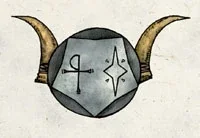
Both Isis and Osiris feature in Dungeons and Dragons: Forgotten Realms. For both gods, the history and myths are slightly altered, but in general, the changes still reflect the same spirit. In the Forgotten Realms, Isis is a caring demigod of the Mulhorandi pantheon, associated with fertility and magic. Known as the Bountiful Lady and Lady of All Love, she shares her discoveries with followers and is aligned as neutral good. Overseeing the Knowledge and Life domains, her symbol combines an ankh and a star. She is called Isharia in Thay and Ishtar in Unther, often depicted as a Mulan woman dressed in white linen, wearing sandals and jewellery. Isis is the daughter of Geb and Nut, wife of Osiris, mother of Horus-Re, and twin sister of Nephthys. She maintains alliances with Sharess and Chauntea, keeps a cordial relationship with Mystra, and opposes Sebek and Shar due to her animosity towards the Shadow Weave.
Her worship centers on Mulhorand's agriculture, with priestesses—mainly Mulan women—trained in arcane and divine magic, dressed in white and marked by three blue circles on their foreheads. Her followers include the Sisters of Life, worshipping alongside deities like Anhur and Osiris, and the Shield of the Lady, spellcasters aiding adventurers. The main temple, Mystic Cornucopia, is located in the Great Vale, and celebrations such as Greengrass and Highharvestide honor Isis for a successful harvest.
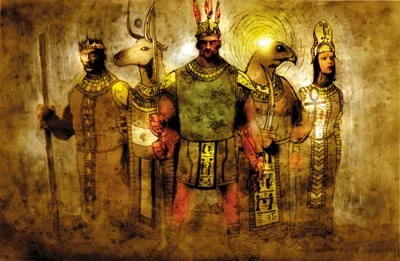
Osiris is another central deity in the Mulhorandi pantheon, associated with death, justice, and natural growth. Known as the Lord of Nature and the Judge of the Dead, he assists souls in their transition to the afterlife and oversees natural cycles. Typically depicted as either a mummified king or a green-skinned warrior, Osiris embodies the connection between death and life. His responsibilities include overseeing death, the dead, justice, harvest, and plant life, aligning with domains of Life, Grave, and Nature in 5th Edition D&D. His symbol features a white Crown of Mulhorand over a crossed crook and flail. Just like in myth, Osiris is the son of Geb and Nut, married to Isis, and father to Horus-Re and Anubis. He is closely allied with Kelemvor from Faerûn, sharing views on the significance of death. His notable enemies include his brother Set, who murdered him long ago, and Mask, the god of thieves, whom he opposes for his chaotic, deceptive nature.
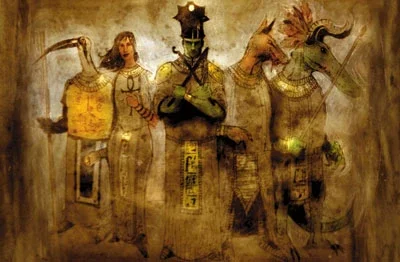
Figure 57. Mulhorandi pantheon 2: Osiris between Thoth and Nephthys (on the left) and Set and Sebek (on the right) (DnD Forgotten Realms).
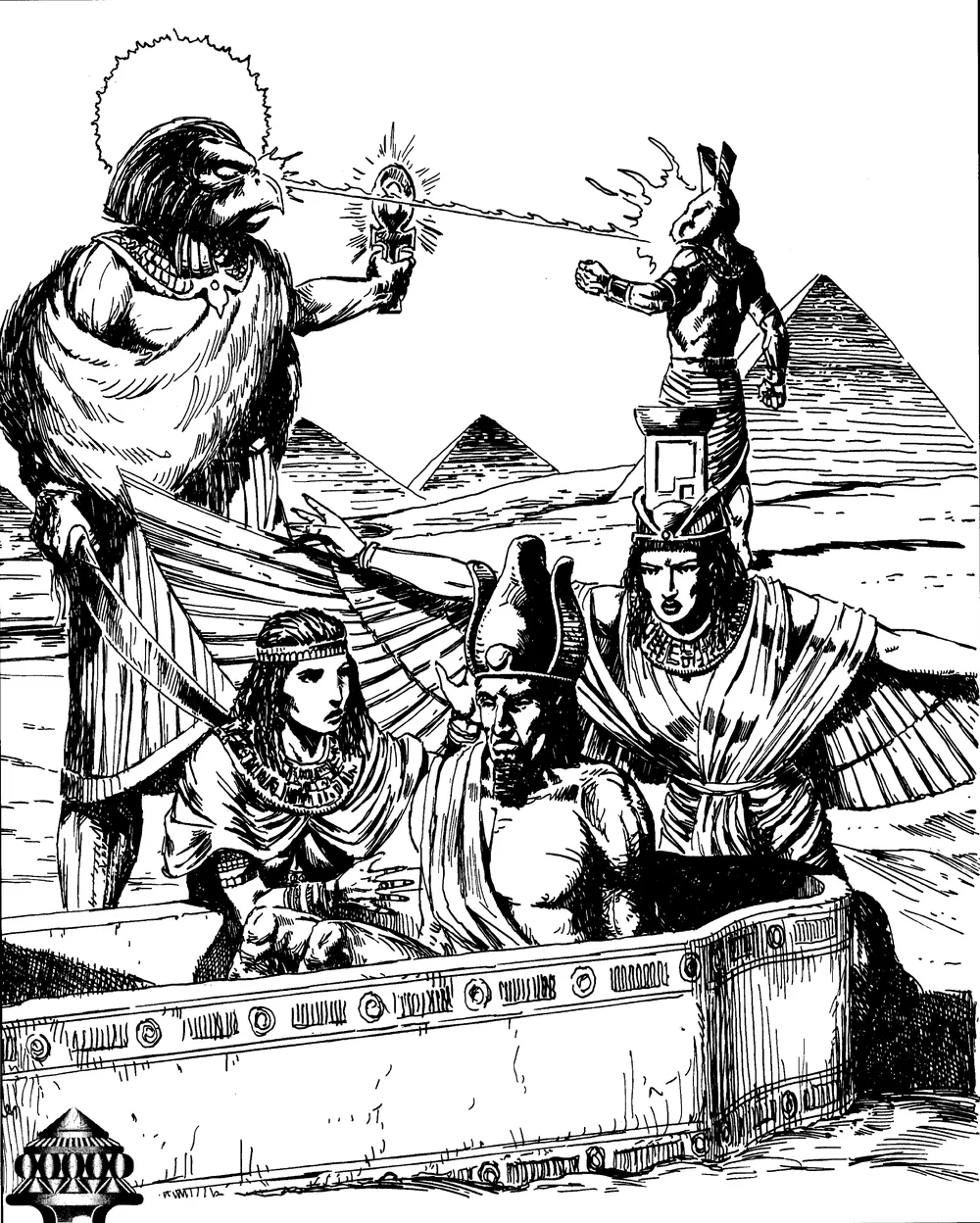
Figure 58. The resurrection of Osiris (DnD Forgotten Realms).
The Evil Within and the Hidden Powers Inside
Of course, it’s not a one-to-one ratio or comparison, but the great power that is hiding inside these two divine beings is way more involved than simple evil forces. And in no way am I saying that either of them is evil. In fact, both of them are, in the ancient Egyptian world, the epitome of goodness. But, depending on the period, they have more muted or more elaborate power sets. For instance, with Osiris, sure, he is a symbol of regeneration, rebirth, and renewal, but he doesn’t seem to actually do much in the afterlife. Other than being a judge. But that may be BECAUSE he was introduced after other afterlife gods and was placed in charge of everything.
This contrasts with the immutable power of Isis. Ultimate power over Re, and hell, just being called the Mistress of Magic. If she wanted to, she could turn into an unstoppable force from out of a fantasy novel. Like if Galadriel had actually taken the One Ring from Frodo. But, aren’t we lucky that she never did? Even if the Christian church had to change the goddess into the Mother of God to sanitize her. Luckily for us today, in terms of adaptations, people didn’t stick to this version and brought her back to power, unless, like in Stargate, they just killed her off and proceeded to combine their tropes by making Osiris female with more power.
I believe that's why I wasn't as put off by this character compared to others. Although it was an evil version of Osiris, it was given more personality than merely a love interest who fell into the ‘taken over by evil, you’re in there somewhere’ trope that his wife, Sha-re, shared. Osiris also experienced more internal conflict, or at least a single-minded obsession, with the host almost urging the symbiote to go to Daniel because she believed he could save her. Osiris and Anubis (which we will discuss) are my favorite Goa'uld, rivaling Apophis. They carry enough significance and influence in the story to make a difference. While these characters are, of course, quite different from their source material, I feel Osiris shares a motive for revenge over his queen's death at the hands of humans. It’s wrong, cruel, evil, and unacceptable in real life, but given he's a crazy megalomaniac that’s been in stasis for 10,000 years, it starts to make sense.
Conclusion
The mythological depictions of Osiris and Isis offer a rich tapestry of insights into ancient Egyptian society, reflecting changing ideologies, religious practices, and artistic expressions through different dynasties. Their evolution from distant deities to central figures in people's lives demonstrates profound narrative adaptability that continues to resonate today.
Further Exploration:
Old Kingdom and First Intermediate Period, an introduction by Dr. Amy Calvert. https://smarthistory.org/old-kingdom-first-intermediate-period-introduction/
References:
Abou El Maati, M. (2025). The hidden nest of Horus through the ancient Egyptian religious texts. Egyptian Journal of Archaeological and Restoration Studies (EJARS), 15(1), 97–104. https://doi.org/10.21608/ejars.2025.434907
Andrews, Carol (1994). Amulets of Ancient Egypt. University of Texas Press. ISBN978-0-292-70464-0.
Bondarenko, N. (2022). THE RELIGIOUS ROLE OF THE EGYPTIAN QUEEN AS HIGH PRIESTESS. CULT OF HATHOR. Bulletin of Taras Shevchenko National University of Kyiv History, (154-155), 5-9. https://doi.org/10.17721/1728-2640.2022.154-155.1
Bradley, Matt (1 February 2015). "Islamic State Affiliate Takes Root Amid Libya's Chaos". The Wall Street Journal.
El-Aziz, R. (2022). WORDS REFERRING TO SWALLOWING IN ANCIENT EGYPTIAN RELIGIOUS TEXTS. Egyptian Journal of Archaeological and Restoration Studies, 12(1), 97-110. https://doi.org/10.21608/ejars.2022.246580
Enany, A. (2018). A Corn-Mummy from the Egyptian Museum in Cairo. Journal of Association of Arab Universities for Tourism and Hospitality, 15(3), 52-62. https://doi.org/10.21608/jaauth.2018.54007
Fahim, T. (2020). Unpublished Anthropoid Wooden Coffin of Padiatum at Beni-Suief Museum. Journal of Association of Arab Universities for
Tourism and Hospitality, 0(0), 0-0. https://doi.org/10.21608/jaauth.2020.31493.1024
Forgotten Realms Wiki. (n.d.). Isis. https://forgottenrealms.fandom.com/wiki/Isis
Forgotten Realms Wiki. (n.d.). Osiris. https://forgottenrealms.fandom.com/wiki/Osiris
The Global Egyptian Museum. (n.d.). Chemmis. http://www.globalegyptianmuseum.org/glossary.aspx?id=111
Goelet, Jr., Ogden; Faulkner, Raymond O.; Andrews, Carol A. R.; Gunther, J. Daniel; Wasserman, James (2015). The Egyptian Book of the Dead: The Book of Going forth by Day, Twentieth Anniversary Edition. Chronicle Books. ISBN978-1-4521-4438-2.
Grajetzki, W. (2020). National administration., 761-777. https://doi.org/10.1093/oxfordhb/9780199271870.013.40
Grajetzki, W. (2022). Egypt’s Middle Kingdom., 854-924. https://doi.org/10.1093/oso/9780190687571.003.0022
Griffiths, J. Gwyn (1980). The Origins of Osiris and His Cult. E.J. Brill. ISBN978-90-04-06096-8.
Griffiths, J. Gwyn (2001). "Isis". In Redford, Donald B. (ed.). The Oxford Encyclopedia of Ancient Egypt. Oxford University Press. ISBN978-0-19-510234-5.
Hassan, S. (2014). ISIS is a cult that uses terrorism: A fresh new strategy. The World Post.
Hassan, H. (2015). The secret world of Isis training camps–ruled by sacred texts and the sword. The Guardian, 25.
Hill, J. (2016). Anubis. Ancient Egypt Online. https://ancientegyptonline.co.uk/anubis/
Isidora. (2024, September 15). Isis in all her names. Isiopolis. https://isiopolis.com/2024/09/15/isis-in-all-her-names-2/
Isidora. (2024, October 27). Syncretism & Isis. Isiopolis. https://isiopolis.com/2024/10/27/syncretism-isis/
Jackson Jr., L. (2025, July 14). From Serapis to Christ: How syncretism shaped imperial religion. Reform on Learning. https://www.linwoodjacksonjr.com/new-blog/2025/7/14/from-serapis-to-christ-how-syncretism-shaped-imperial-religion
Kantor H. J. (1957). Narration in Egyptian Art. American Journal of Archaeology
Koemoth P. (1996). Osiris-Lune, l'horizon et l'œil oudjat.
Larson, Martin A. The Story of Christian Origins (1977).
Llonch, M. (2020). El acto sexual como agente del (re)nacimiento de Osiris. Trabajos De Egiptología Papers on Ancient Egypt, (11), 241-261. https://doi.org/10.25145/j.tde.2020.11.15
Meehan, E. (2022, November 29). Osiris. Mythopedia. https://mythopedia.com/topics/osiris/
The Metropolitan Museum of Art. (n.d.). Tit amulet [Amulet]. https://www.metmuseum.org/art/collection/search/548207 (Original work published ca. 1550–1070 BCE).
Mikhail L. (1984). Dramatic Aspects of the Osirian Khoiak Festival: An Outline (V)
Orriols-Llonch, Marc (2020). El acto sexual como agente del (re)nacimiento de Osiris
Pinch, Geraldine. (2004). Egyptian mythology: A guide to the gods, goddesses, and traditions of ancient Egypt. Oxford University Press.
Quirke, S. and Lichtheim, M. (1992). Ancient Egyptian Autobiographies, Chiefly of the Middle Kingdom: A Study and an Anthology. The Journal of Egyptian Archaeology, 78, 330. https://doi.org/10.2307/3822096
Sad_Watercress_7930. (2024). Re: Why does Herbert call Isis a “demon-goddess”? He specifically links it to the language they were speaking, which is close to Middle Egyptian. Isis was never a demon. [Online forum post]. Reddit. https://www.reddit.com/r/dune/comments/1hjzdec/comment/j39y6k0/